As Parliament approaches crucial budget votes, Portuguese local communities call for proportionality, consultation, and protection of collective rights.
First published on 11/23/2026
Shared by BALADI—Portuguese National Federation of Commons, and the ICCA Consortium
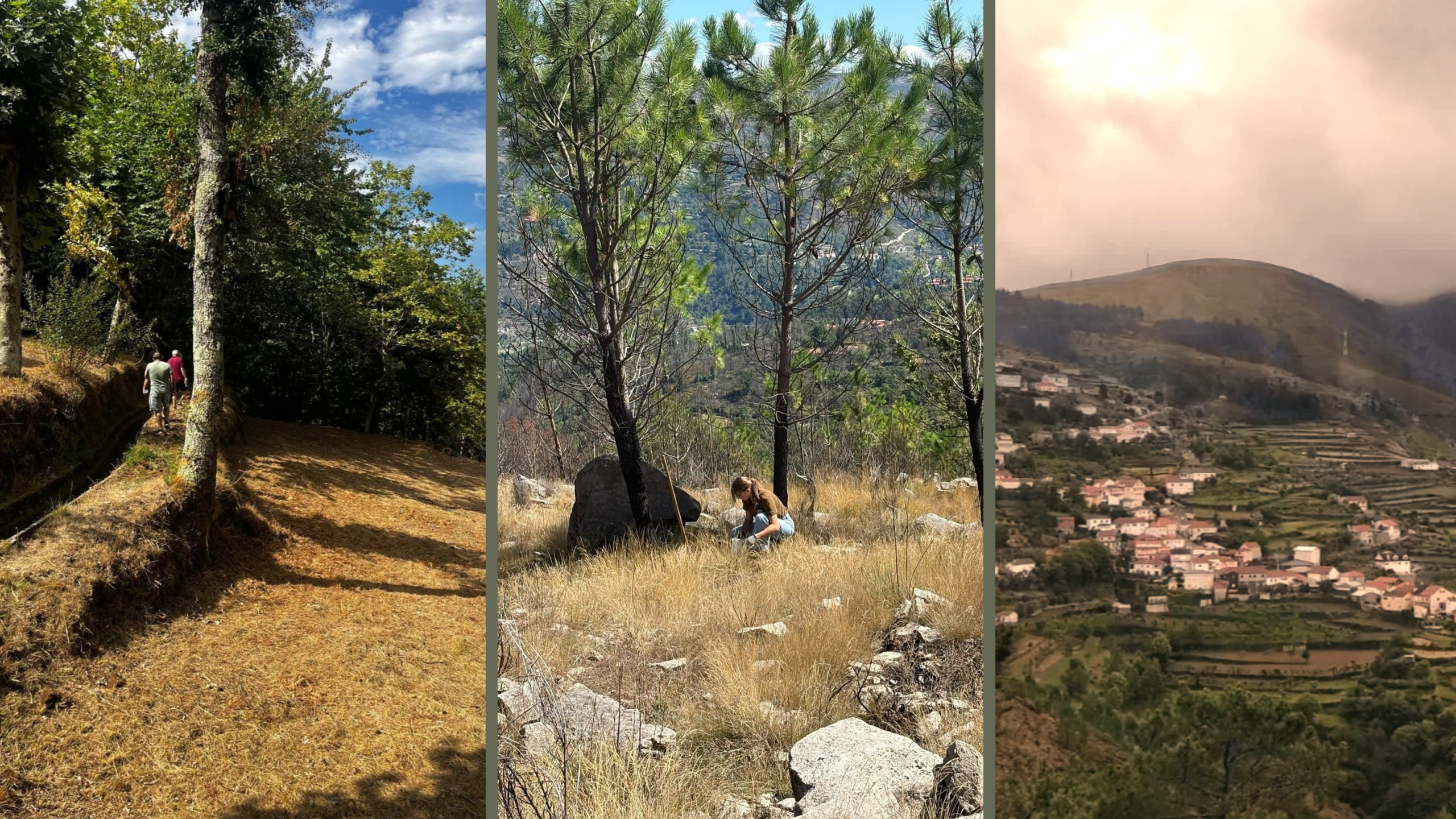
Portugal’s baldios are Local Community-governed areas of farming and pastoralism, forests, biodiversity, local livelihoods, and cultural continuity. Yet the distinct legal framework of baldios is now the subject of a last-minute parliamentary amendment introduced through the 2027 State Budget.
The Portuguese National Federation of Commons, BALADI, is calling for the withdrawal of Amendment No. 1787C-1 to the state budget bill. BALADI also calls for international solidarity with the communities that own and govern these territories through their democratic institutions.
What Is Being Proposed in Parliament?
On November 6, 2026, members of Parliament from Portugal’s governing coalition, the Social Democratic Party (PSD) and CDS – People’s Party (CDS-PP), submitted Amendment No. 1787C-1 to State Budget Bill No. 110/XVII/2.
The amendment would modify Articles 4, 13, and 16 of Law No. 75/2017 (the Portuguese Commons Law) and add a new Article 13-A.
- Legal personality: Explicitly grant legal personality to Local Communities, which already hold rights and duties and have legal standing under the current law. The effects on their distinctive community status and patrimonial responsibilities require careful analysis.
- Mandatory certified accounting: Require every community to maintain organized accounts under the responsibility of a certified accountant, regardless of land area, assets, revenue, or regular economic activity.
- Expanded annual reporting: Require financial statements, management reports, updated inventories, disclosure of funding, review by the supervisory body, approval by the assembly of commoners, and filing on an electronic platform.
- Tax provisions: Recast tax-exemption provisions and related documentary obligations. BALADI seeks explicit assurance that existing safeguards, notably the property-transfer tax (IMT) exemption, will remain intact.
The amendment’s explanatory note states that its purpose is to improve management by strengthening oversight and accountability.
BALADI supports transparency and the proper use of community resources but considers that no adequate assessment has been provided of the different costs and consequences for communities.

Why Do These Commons Matter?
Portugal’s Constitution recognizes community-owned means of production as a distinct part of the cooperative and social sector (Article 82(4)(b)). The baldios are not simply parcels of land or investment assets: they are the material basis of local institutions through which generations of commoners (compartes) have exercised collective rights.
They sustain grazing, access to firewood and other traditional uses, woodland stewardship, habitat conservation, wildfire-risk reduction, and rural social cohesion. Many of these benefits are nonmonetary. A community may have little cash income and still make an important ecological, cultural, and economic contribution.
What Is at Stake?
This amendment does not directly abolish collective ownership, privatize baldios, transfer land to municipalities, or require communities to contract external managers. The immediate concern is different: uniform certified professional accounting costs and additional reporting requirements could overburden communities with few resources, including those striving to restore their elected governing bodies.
The proposal to grant legal personality may also have legitimate practical benefits. However, it requires an explicit examination of the nature of community property, the scope of patrimonial responsibility, and the safeguards needed to ensure that legal recognition strengthens, rather than substitutes for, democratic self-governance.
A Broader Challenge: From Living Commons to Financial Assets?
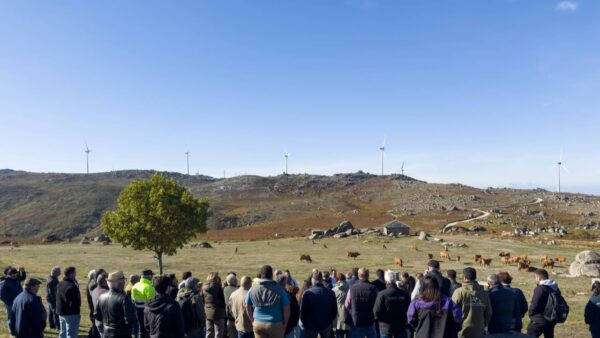
BALADI also reports that Local Communities are being approached by external operators proposing long-term arrangements for the management or commercial exploitation of forests, energy resources, and environmental services. Such arrangements are not necessarily incompatible with community rights. Their implications depend on their duration, terms, safeguards, distribution of benefits, and the continuing power of commoners to decide.
The wider risk deserves attention: collective ownership could remain intact on paper while communities might gradually lose effective control over the everyday use and management of their lands. In regions already affected by rural depopulation, such disconnection could weaken pastoralism, local livelihoods, intergenerational knowledge, and the reasons for people to remain engaged with their territories.
This is a wider concern for research and public policy, not a demonstrated intention or automatic effect of Amendment No. 1787C-1. It underlines why reforms should assess the lived capacity of communities to govern, rather than focusing solely on their formal legal or financial status.
An Urgent Parliamentary Timetable
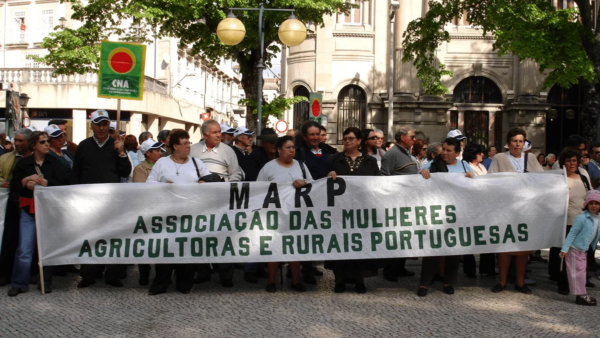
On November 19, BALADI formally wrote to the president of the Portuguese Parliament and issued a public statement calling for the amendment to be withdrawn or, if maintained, rejected. It has alerted parliamentary groups, Local Communities, and academic partners.
Debate and voting on the State Budget at the detailed stage are scheduled to conclude on Monday, November 23, 2026; the final overall budget vote is scheduled for Tuesday, November 24. As of November 21, the amendment is a proposal, not enacted law; its individual vote and outcome have not been confirmed.
Call to Action
BALADI calls on the Portuguese Parliament to:
- Withdraw Amendment No. 1787C-1 to the state budget bill or reject it if it is brought to a vote;
- Ensure meaningful consultation of commoners and their representative organizations, and independently assess any future change to the legal status of Local Communities;
- Adopt proportionate accountability requirements, with appropriate technical support for communities with limited income or organizational capacity;
- Safeguard existing collective-property and fiscal protections, including an explicit assessment of tax exemptions and potential patrimonial liabilities; and
- Strengthen community-led governance and rural livelihoods, ensuring that professional assistance and commercial partnerships remain accountable to community decisions.
International Solidarity
BALADI invites members and partners of the ICCA Consortium, the International Land Coalition, academic networks, and organizations supporting community territories to share this alert, seek legal and scientific scrutiny, and express solidarity with Portuguese Local Communities. A coordinated statement of support could also contribute to a broader European dialogue on the effective protection of commons.
The mobilization around France’s sections de commune shows the value of solidarity across borders. The legal proposals in France and Portugal are different; their shared question is whether institutions of collective land governance can exercise their rights in practice.
Community lands belong to communities, their future must not be decided without them.
Further Information and Documentation
- Original parliamentary Amendment No. 1787C-1 (November 6, 2026; available from BALADI upon request)
- BALADI public statement (November 19, 2026): https://www.baladi.pt/comunicados/baladi-alerta-para-os-riscos-da-alteracao-a-lei-dos-baldios/
- Portuguese Commons Law, Law No. 75/2017: https://diariodarepublica.pt/dr/detalhe/lei/75-2017-108010871
- Portuguese Parliament, OE2027 voting schedule: https://www.parlamento.pt/Paginas/2026/novembro/OE2027_debate-votacao-especialidade-final-globa-23-24nov.aspx
Contact
BALADI, Portuguese National Federation of Commons. Email: balado [at] baldios [dot] org
