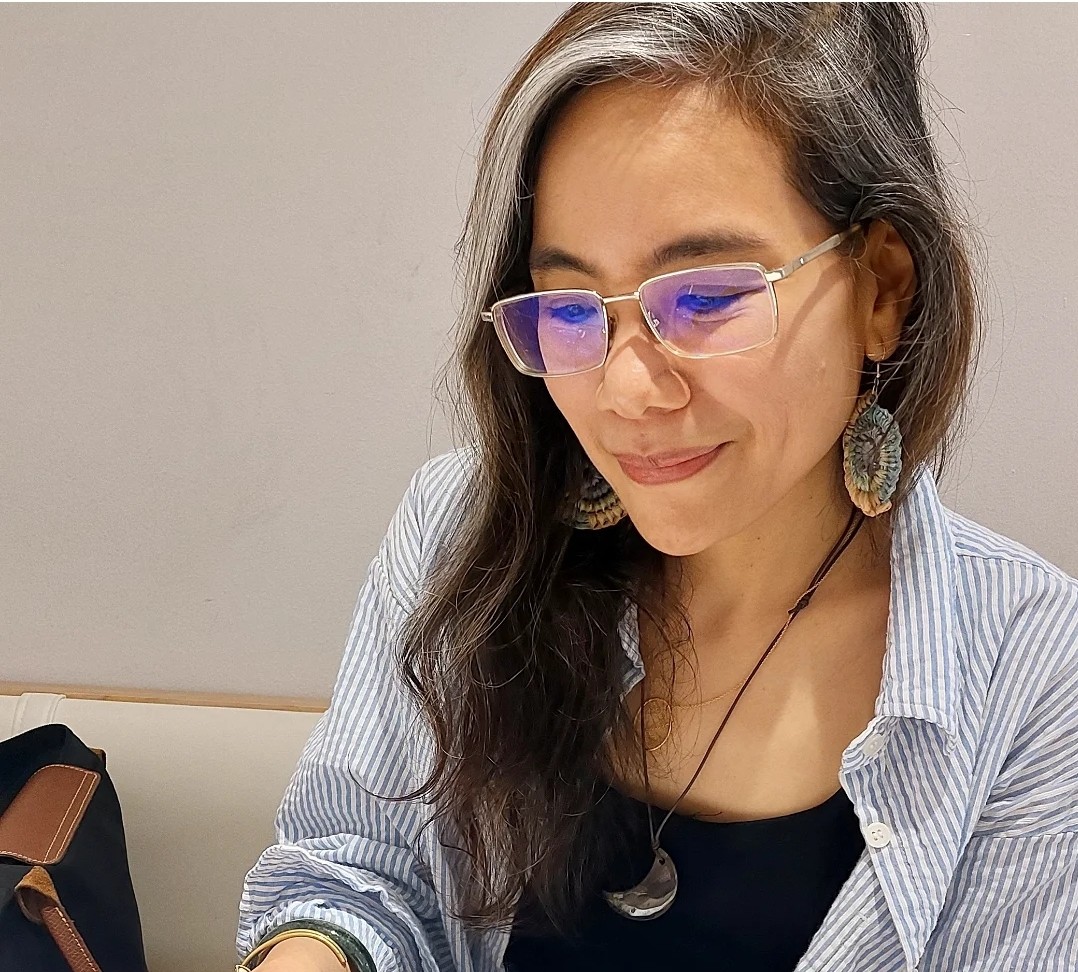
June Rubis
Former thematic representative for documenting territories of life
Dr. June Rubis is a Bidayuh scholar, conservation biologist, and Indigenous governance strategist from Sarawak, Malaysian Borneo. Her work spans Indigenous territorial governance, biodiversity policy, and decolonial research, grounded in long-term field-based conservation and sustained engagement with Indigenous communities in Malaysia.
She began her career as a conservation biologist, spending over a decade conducting wildlife field research across Borneo and Peninsular Malaysia, including surveys of primates and large mammals. Her early work contributed to long-term conservation research and placed her at the interface of conservation science, Indigenous territories, and contested land-use landscapes.
Alongside her conservation fieldwork, Dr. Rubis was actively involved in environmental and civic organizing through the Malaysian Nature Society (MNS), Kuching Branch, where she contributed to initiatives on peri-urban nature, public environmental awareness, and everyday stewardship. This work complemented her field research by situating conservation within urban and peri-urban social landscapes.
After transitioning away from full-time conservation fieldwork, she became more directly engaged in Indigenous land rights advocacy in Sarawak, working with activists and community leaders supporting communities affected by large-scale development projects, including mega-dams. Her work during this period included documentation, media engagement, and organizing, helping to connect local struggles to broader national conversations. She was also involved in grassroots democratic mobilization during Malaysia’s Bersih movement and helped organize the first Bersih rally in Sabah, alongside engagement with urban youth on participatory democracy.
Dr. Rubis holds an MSc (Distinction) and DPhil in Geography & Environment from the University of Oxford. Her doctoral research developed a decolonial Indigenous approach to conservation, examining how Indigenous sovereignties, memory, and relational ethics challenge dominant conservation and governance frameworks.
She is currently a Research Fellow at Macquarie University, Australia, where she leads Decolonial Cartographies, a research project examining the political implications of global biodiversity mapping, data infrastructures, and conservation finance for Indigenous territories and governance authority.
At the global science–policy interface, Dr. Rubis is a Lead Author for the IPBES Second Global Assessment, contributing to international assessments shaping biodiversity policy worldwide. She is an Indigenous Fellow (2025) with Arizona State University on global Indigenous futures, and sits on the editorial board of Progress in Environmental Geography. She has also served as a consultant to the United Nations, contributing to biodiversity negotiations and Indigenous governance processes.
Her scholarship advances conceptual frameworks such as contra-memory, which examines Indigenous storytelling and embodied memory as forms of political authority, and decolonizing conservation, which re-centers Indigenous sovereignties within environmental governance. Her work has been published in peer-reviewed international journals across geography, conservation, sustainability, and cultural studies.
Dr. Rubis is also a co-founder of Building Initiatives in Indigenous Heritage (BIIH), a Bidayuh-led foundation in Sarawak that supports ritual revitalization and kinship governance as living systems of Indigenous authority and environmental care.
Since 2020, she has actively served two full terms for the ICCA Consortium as the Global Co-Chair for Documenting Territories and is the Regional representative for Southeast Asia for Documenting Territories.