Statement by the ICCA Consortium to the 17th meeting of the Conference of the Parties (COP17) to the Convention on Biological Diversity (CBD) in Yerevan, Armenia
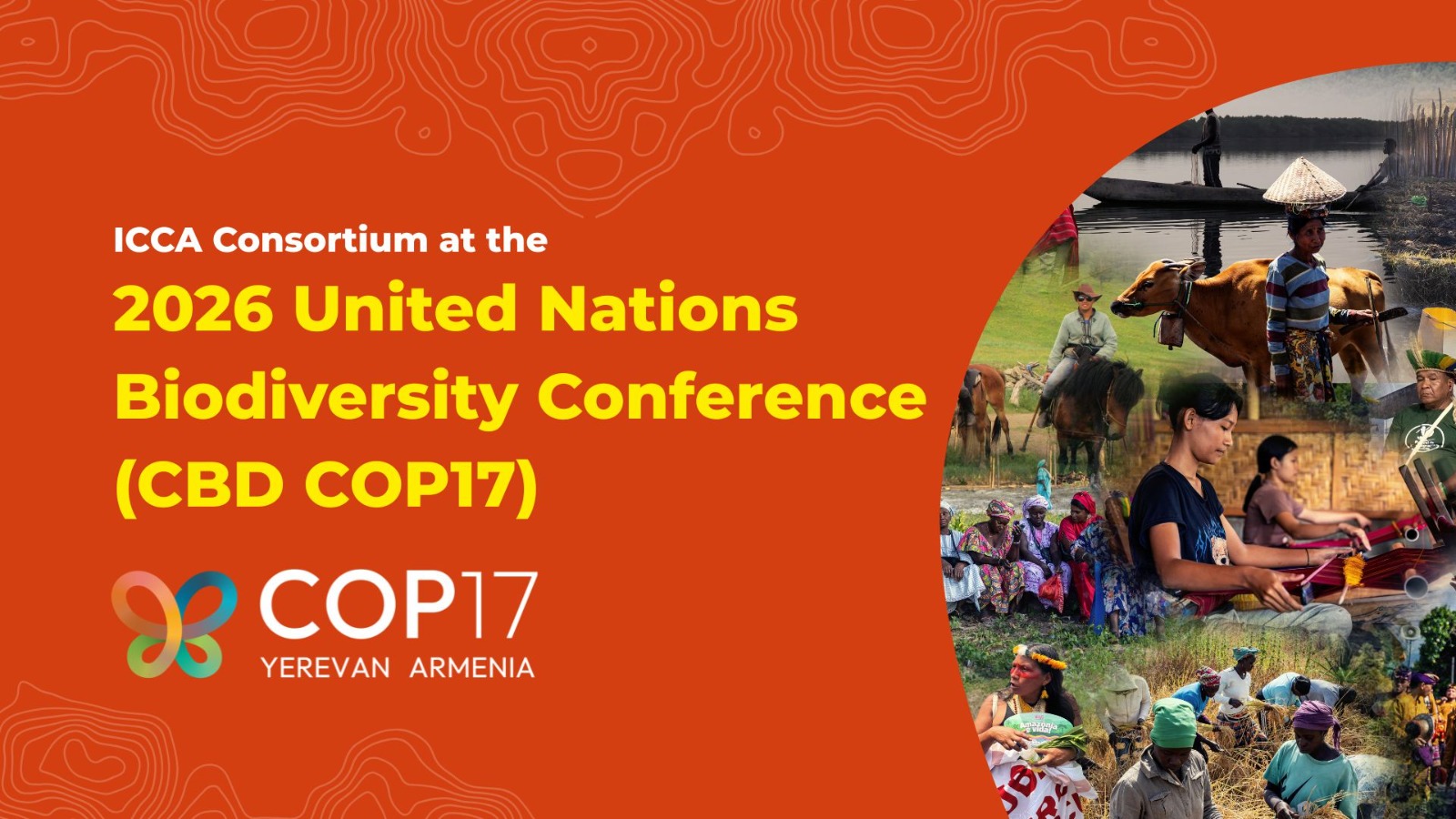
First published on 10/18/2026
ICCAs–territories of life are territories and areas where Indigenous Peoples and Local Communities have deep historical, cultural, and spiritual relationships with nature, exercise collective governance through their own institutions, and contribute to the conservation of biological and cultural diversity, livelihoods, and community well-being. They are living territories, sustained through generations of collective rights, responsibilities, knowledge, practices, and care for nature.
The ICCA Consortium is a global membership-based association and solidarity movement bringing together Indigenous Peoples, community custodians of territories of life, and their supporters. Guided by our Manifesto for territories of life, we work towards a world where territories of life and their custodians thrive through self-determination, recognition of their collective rights and responsibilities, and the well-being of all beings.
At CBD COP17, we, the ICCA Consortium, reaffirm that the vision of living in harmony with nature cannot be achieved without recognizing, respecting, and supporting ICCAs–territories of life and their custodian Indigenous Peoples and Local Communities. The Kunming-Montreal Global Biodiversity Framework (KM-GBF) has provided an important opportunity, but its implementation must bring meaningful changes to conservation policies, practices, and the relationship between people and nature at all levels.
The first Global Review sends a clear warning: despite unprecedented global engagement, collective progress under the KM-GBF remains uneven and insufficient to achieve its 2030 targets.
The KM-GBF already provides a transformative direction, including through Section C. The question is whether Parties will implement that vision or allow it to remain a promise on paper.
Section C must be the test of implementation, reporting, and accountability—not an optional safeguard. It requires the Framework to respect the rights, knowledge, and self-determination of Indigenous Peoples and Local Communities (IPLCs), including through free, prior, and informed consent (FPIC) and their full and effective participation.
The ICCA Consortium calls on Parties to translate this commitment into action across the following five connected priorities:
Learn more: Statements on specific agenda items
- Statement on 8(a): Resource Mobilization
- Statement on 8(b): Financial Mechanism
- Statement on 10(a): Modus Operandi
- Statement on 17(a): Matters related to the work programme of the Intergovernmental Science-Policy Platform on Biodiversity and Ecosystem Services (IPBES)
- Statement on 17(b): Strategic Review and Update of the Expanded Programme of Work on Forest Biodiversity
- Statement on 17(c): Programme of Work on Protected Areas (PoWPA)
- Statement on 18(c): Marine and Coastal Biodiversity and Island Biodiversity
First, recognize territories of life, secure collective tenure, and respect customary governance. Implementation of Target 3 must go beyond counting hectares towards 30×30. Parties must separately identify, recognize, and report Indigenous and Traditional Territories (ITTs), including ICCAs–territories of life, as a distinct category, making their contributions, governance systems, and custodians visible in the monitoring framework. These must include those ITTs and ICCAs–territories of life that are overlapped by protected areas and other effective area-based conservation measures (OECMs) without their FPIC. Target 3 must be implemented in conjunction with Target 22.
Second, transform biodiversity finance and align economic and fiscal systems with the KM-GBF. Negotiations on resource mobilization and the financial mechanism must go beyond raising new funds. Parties must implement Targets 14 and 18 by mainstreaming biodiversity across economic, fiscal, and development policies, and eliminating, phasing out, or reforming harmful subsidies and financial flows. Public budgets, investment, and development policies must no longer finance activities that drive biodiversity loss, undermine collective tenure, or threaten ICCAs–territories of life. At the same time, Target 19 must deliver adequate, predictable, accessible, and sustained resources, including direct finance for Indigenous Peoples and Local Communities and their community-led conservation initiatives.
Third, defend data sovereignty and epistemic justice. Implement Article 8(j) and ensure that KM-GBF implementation approaches, including digital sequence information on genetic resources, synthetic biology, and emerging technologies, do not enable the extraction of community knowledge and resources without consent, recognition, and fair and equitable benefit-sharing in relation to both primary and secondary use.