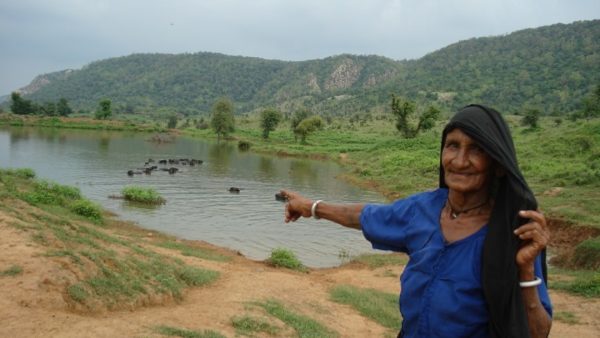
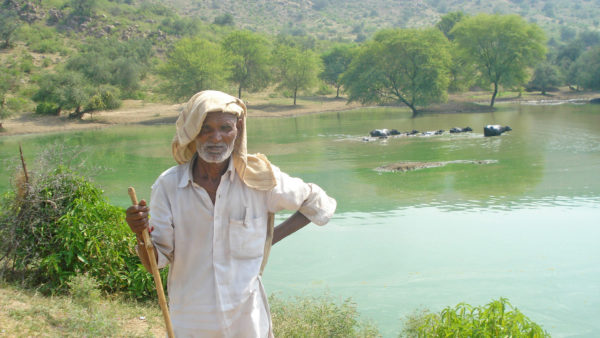
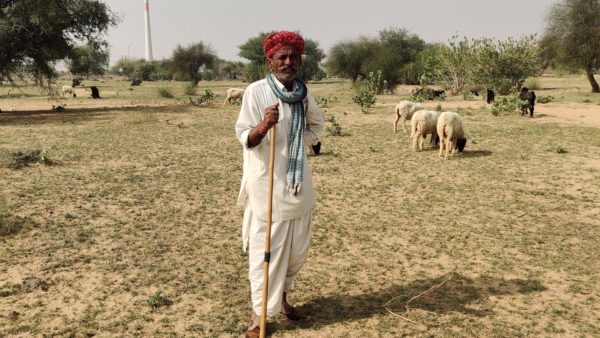
Orans and Devbanis are community-conserved sacred groves that embody India’s ancient tradition of ecological stewardship, particularly across the Thar Desert and the Aravalli Range
First published on 03/17/2026, and last updated on 04/01/2026
By Aman Singh and J.P. Singh, Krishi Avam Paristhitiki Vikas Sansthan (KRAPAVIS), Member of the ICCA Consortium
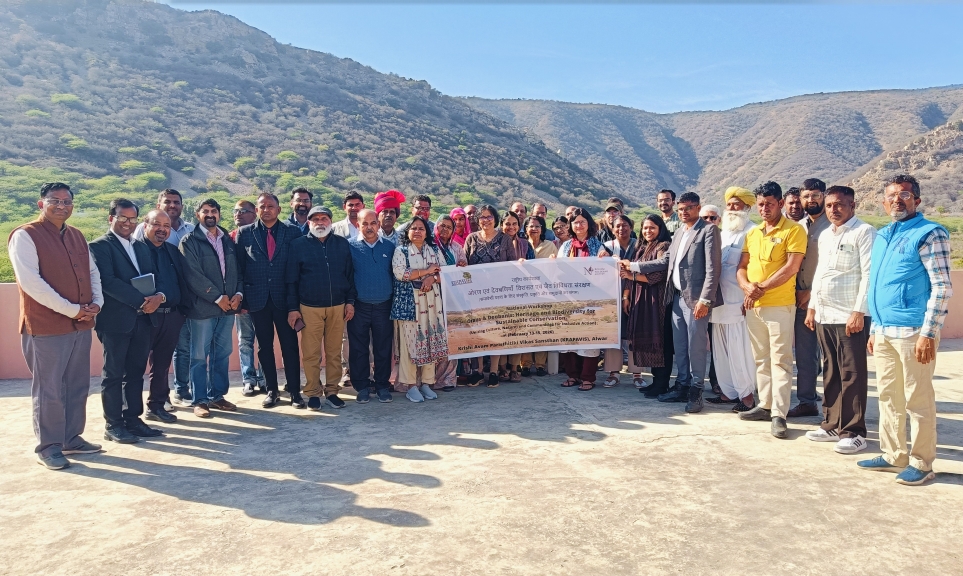
In India, KRAPAVIS recently convened a three-day national workshop titled “Orans and Devbanis: Heritage and Biodiversity for Sustainable Conservation.” Around 60 participants from across the country—including representatives of government agencies, academic and research institutions, civil society organizations, community representatives, and Oran custodians—contributed to rich deliberations and strategic dialogue throughout the workshop.
The workshop was organized from February 13 to 15, 2026, at the KRAPAVIS Oran Training Centre in Alwar, Rajasthan, with financial support from the Rohini Nilekani Philanthropies Foundation.
The first technical session focused on policy and legal frameworks for conservation of Orans. It brought together legal experts, academics, and practitioners to critically examine the evolving jurisprudence and policy landscape surrounding community-conserved sacred groves. The session underscored that strengthening legal clarity, improving institutional coordination, and securing common rights are central to safeguarding the future of Orans as vital socio-ecological systems.
The second session addressed biodiversity and ecological studies on Orans. The discussions highlighted the ecological richness of Orans and emphasized science-based strategies for their conservation and restoration. The session reaffirmed that strengthening ecological research, integrating traditional knowledge, and investing in restoration infrastructure are critical for sustaining Orans as resilient biodiversity hotspots in India’s dryland landscapes. Participants also emphasized that blending technology, ecological science, and community stewardship is essential for evidence-based conservation planning.
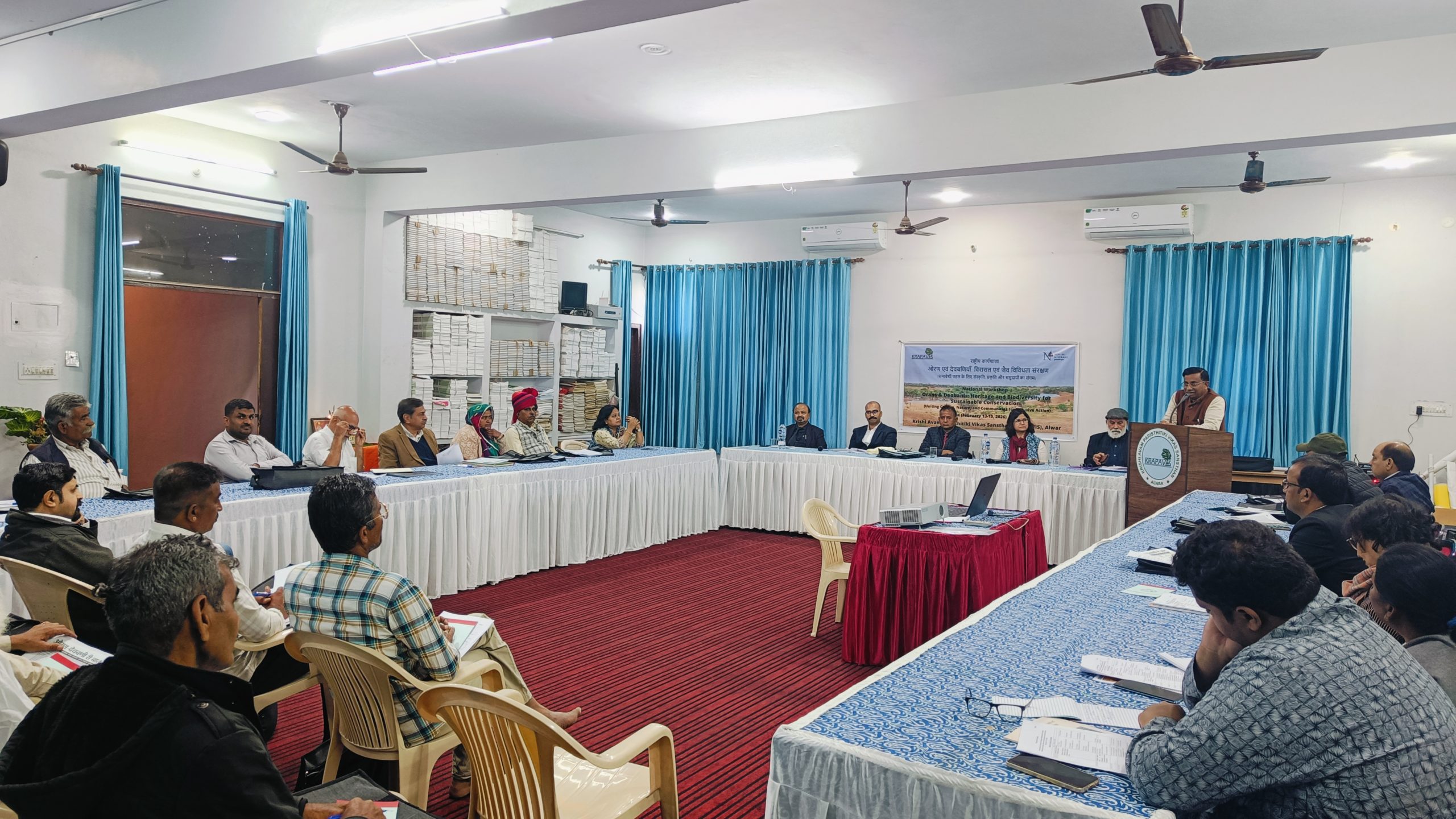
Resource management and Indigenous traditional knowledge in sacred groves were discussed in the following session. This session underscored the critical role of community stewardship, traditional ecological knowledge, and scientific tools in strengthening conservation efforts. It highlighted the need for integrated approaches—combining policy support, sustainable livelihoods, and geospatial mapping—to ensure the long-term resilience of these culturally and ecologically significant landscapes.
The fourth session centered on cultural heritage and community practices in Commons and Orans, while also celebrating the ongoing International Year of Rangelands and Pastoralists. The session reinforced the importance of integrating cultural traditions, pastoral knowledge, and supportive policy frameworks to strengthen commons governance. It called for greater recognition of community-led conservation models and enhanced institutional support to ensure the sustainability of rangelands and pastoral livelihoods.
Following the successful completion of sessions over two days, a field visit was organized for 15 enthusiastic workshop participants. For those visiting from outside Rajasthan, the experience offered exposure to a distinctive geographical and ecological setting markedly different from their native regions. One of the most impactful aspects of the visit was the understanding of the integrated “Oran-Devbanis and Water Conservation” system.
Participants observed how local communities harvest rainwater using traditional techniques, regulate grazing and biomass extraction through customary norms, and maintain the sanctity of the Devbanis through faith-based stewardship. Overall, the field visit proved both informative and inspiring. In addition to observing diverse flora and fauna, participants gained practical insights into community-driven conservation models, motivating them to apply similar culturally rooted and ecologically sound approaches within their own landscapes.
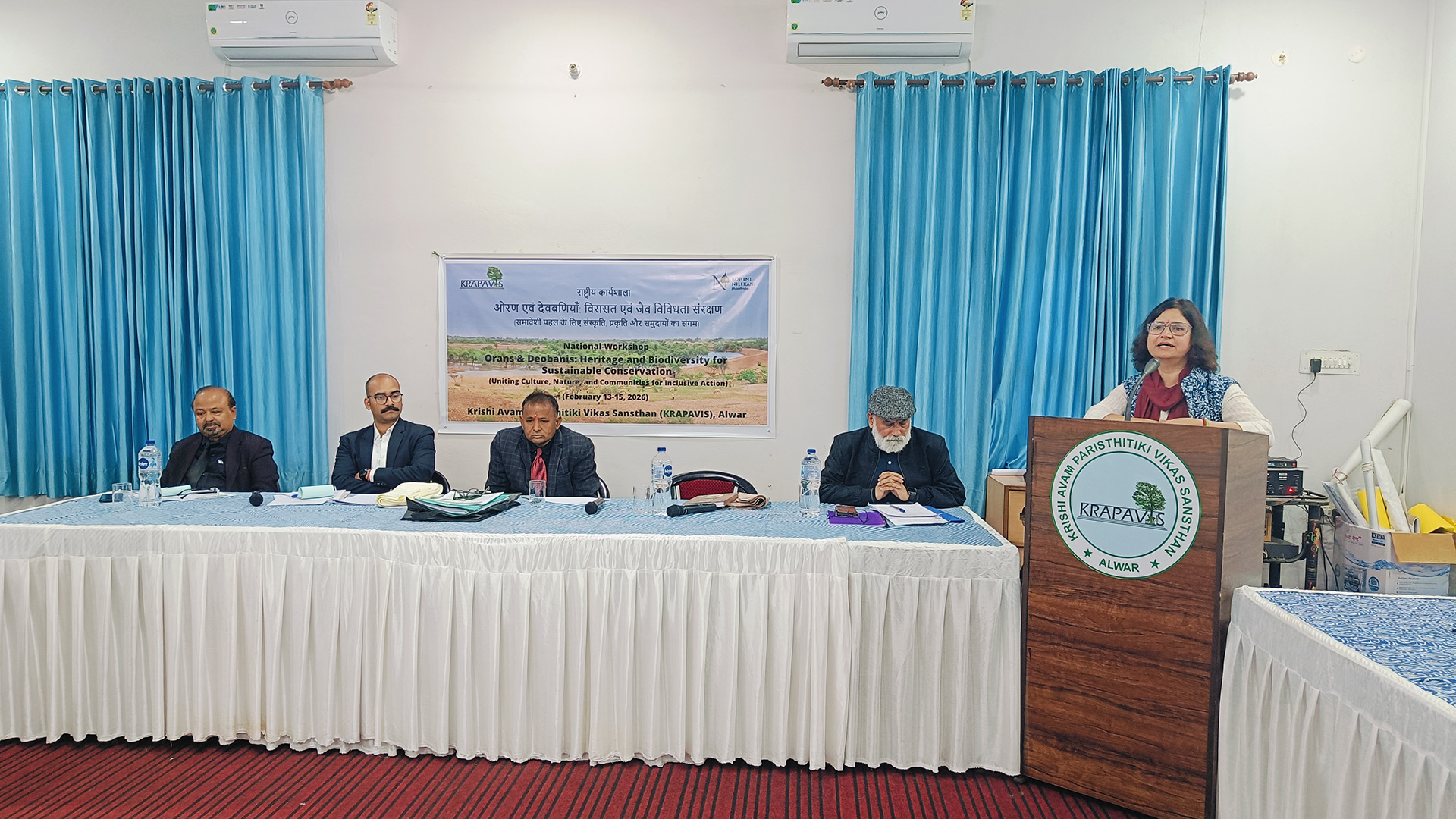
The distinguished participants included Dr. C.R. Meena, Chief Conservator of Forests and Member Secretary of the State Oran Committee (constituted as per the direction of the Supreme Court judgment dated December 18, 2024, in IA No. 41723/2022; Re. Aman Singh); Dr. Neema Pathak, Global Policy Coordinator of ICCA; Prof. Purnendu Kavoori, Director, CenSE, Jaipur; Dr. Archna Godbole, Director, AERF, Pune; Prof. Aaditeshwar Seth, IIT Delhi; Prof. Yogesh Gokhale from AIPRIS, MSU, Vadodara; Dr. Prabhakar Rajgopal, Director, MetaString Foundation, Chennai; Shri P. Vivekanandan, Director, SEVA & Chair of the IYRP South Asia; Shri Manu Bhatnagar, Director, INTACH, New Delhi; Dr. P.C. Moharana, Principal Scientist, ICAR-CAZRI, Jodhpur; Smt. Alka Tirkey, FES, Bhilwara; N.K. Bohra, Scientist-D, ICFRE-AFRI, Jodhpur; Adv. Shankar Pani, Bhubaneswar; Mrs. Pratibha Sisodia, Director, KRAPAVIS; Dr. J.P. Singh (Advisor, KRAPAVIS); and Shri Aman Singh, Founder of KRAPAVIS.
Based on the deliberations, technical presentations, and stakeholder consultations during the National Workshop, the following key priorities emerged for strengthening the long-term ecological resilience and sustainability of these community-conserved landscapes:
- Mapping, delineation, and legal recognition of Orans;
- Vegetation assessment and tree density estimation;
- Strengthening institutional collaboration;
- Documentation of socio-cultural traditions and traditional ecological knowledge;
- Establishment of indigenous seed banks and restoration material systems;
- Promotion of community-led ecological restoration;
- Ecosystem services valuation; and
- Development of a framework for drafting a National Policy on Sacred Groves in India, following the judgment of the Supreme Court dated December 18, 2024 (in IA No. 41723/2022; Re. Aman Singh).
This national workshop also witnessed the release of a new Hindi publication by KRAPAVIS along with the launch of the Digital Calendar 2026 and a documentary titled “Oran—The Story of Rajasthan’s Sacred Groves.” The event further featured the KRAPAVIS Oran Prahari Award 2026 ceremony.