Recap of the second session in the ICCA Consortium's “Learning Exchange on National Networks of ICCAs–territories of life” series, which was held on July 3, 2026
First published on 08/19/2026
ICCA Consortium
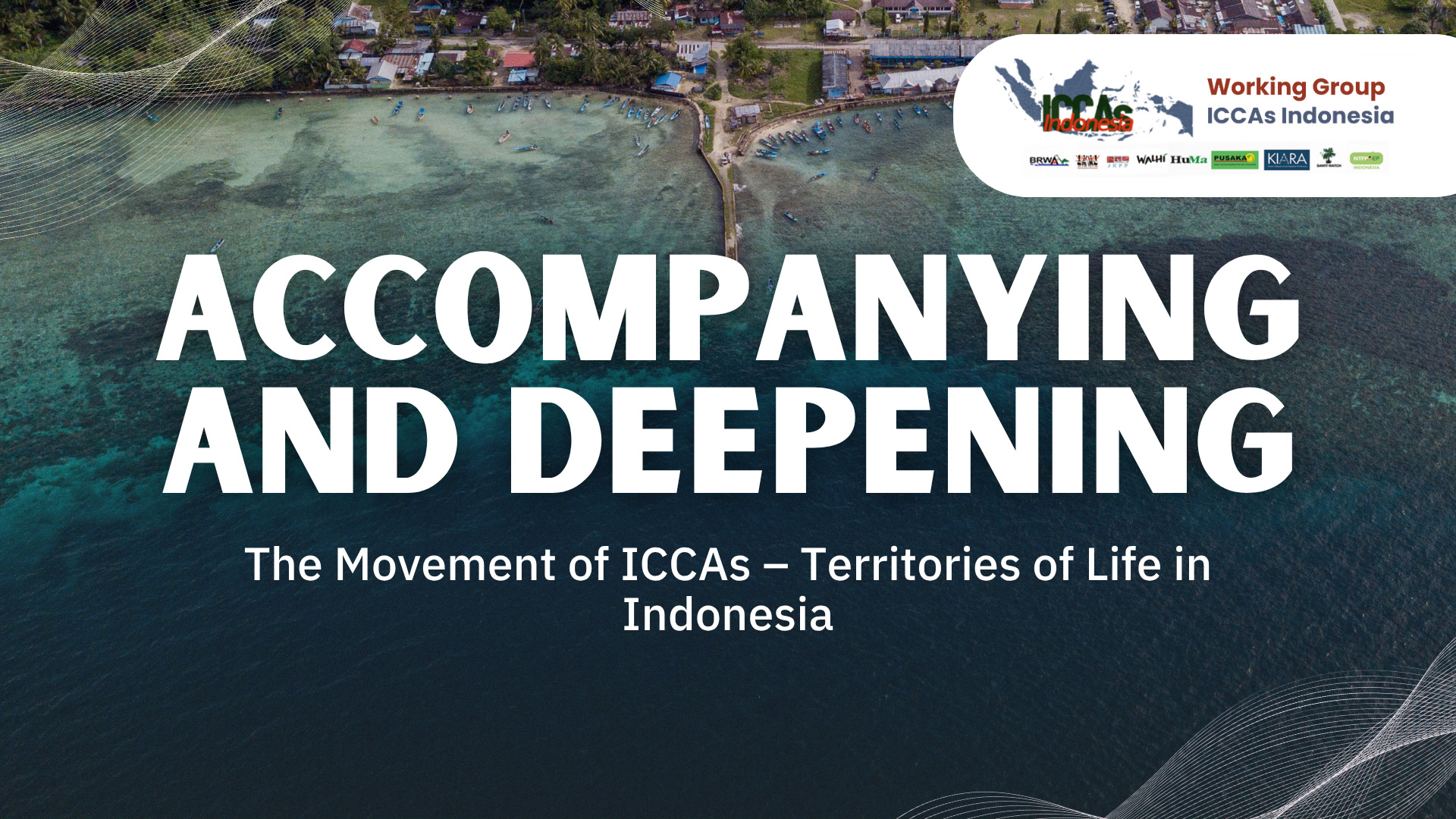
The second session in the ICCA Consortium’s learning exchange series on national networks was held online on July 3, 2026, featuring the Working Group for ICCAs in Indonesia (WGII)—now also legally registered and known as Perkumpulan Gerakan Konservasi Rakyat Nusantara (PGKRN). PGKRN is one of the pioneering ICCA networks, involved with the Consortium since its earliest days. The session was attended by participants and drew attendees from national networks and member organizations worldwide, including members from Spain, India, Madagascar, and Myanmar.
Cindy Julianty, PGKRN’s Executive Coordinator, led the presentation together with its Secretariat officers Lasti Fardilla Noor and Mega Ayu Lestari, taking participants through the history of accompanying and deepening the movement of ICCAs–territories of life in Indonesia. Its co-founder and ICCA Consortium’s honorary member Cristina Eghenter also joined the session to provide additional historical context.
The network’s growth was shaped by a period of relative political openness in Indonesia between 2011 and 2017, decades of participatory mapping led by its member organizations, and the catalytic role of the global ICCA Consortium, including the 2011 Bogor symposium and discussions at the 2013 General Assembly in Mexico about civil-society intermediaries versus direct community and custodian representation.
The network traces its origins to 2011 and became a formal member of the ICCA Consortium in 2015, a status it holds today. It is currently a nine-member coalition of established civil society organizations: AMAN, BRWA, JKPP, NTFP-EP, Kiara, HUMA, WWF-Indonesia, Sawit Watch, and WALHI (Friends of the Earth Indonesia). “Each member has its own strength in mobilizing the movement,” Cindy said. “Some work on human rights, others on natural resources, sustainable use, or tenure rights. Together, we initiated the effort for recognition of ICCAs–territories of life. Our goal is to support gerakan—the people’s conservation movement.”
The group operated for over a decade as a flexible, secretariat-coordinated consortium, hosted first by NTFP-EP Indonesia and, from 2013 to 2025, by the Indigenous Territory Registration Agency (BRWA). In 2025, members formally adopted an organizational statute and registered as a legal association, moving from a fluid coalition to a structured, membership-based body.
Governance now runs through three tiers: strategic direction set by a General Assembly held every four years, institutional decisions made through quarterly coordination meetings, and day-to-day operations managed by the secretariat. Leadership terms are capped at four years, renewable once for the Executive Coordinator, with a 15-year limit for secretariat staff to ensure generational renewal.
PGKRN’s mandate is to support the protection and sustainable use of biodiversity in Indonesia, grounded in human rights, traditional knowledge, and justice, and to elevate recognition of ICCAs–territories of life so that Indigenous Peoples’ and Local Communities’ conservation practices are recognized by government, education systems, and other institutional actors.
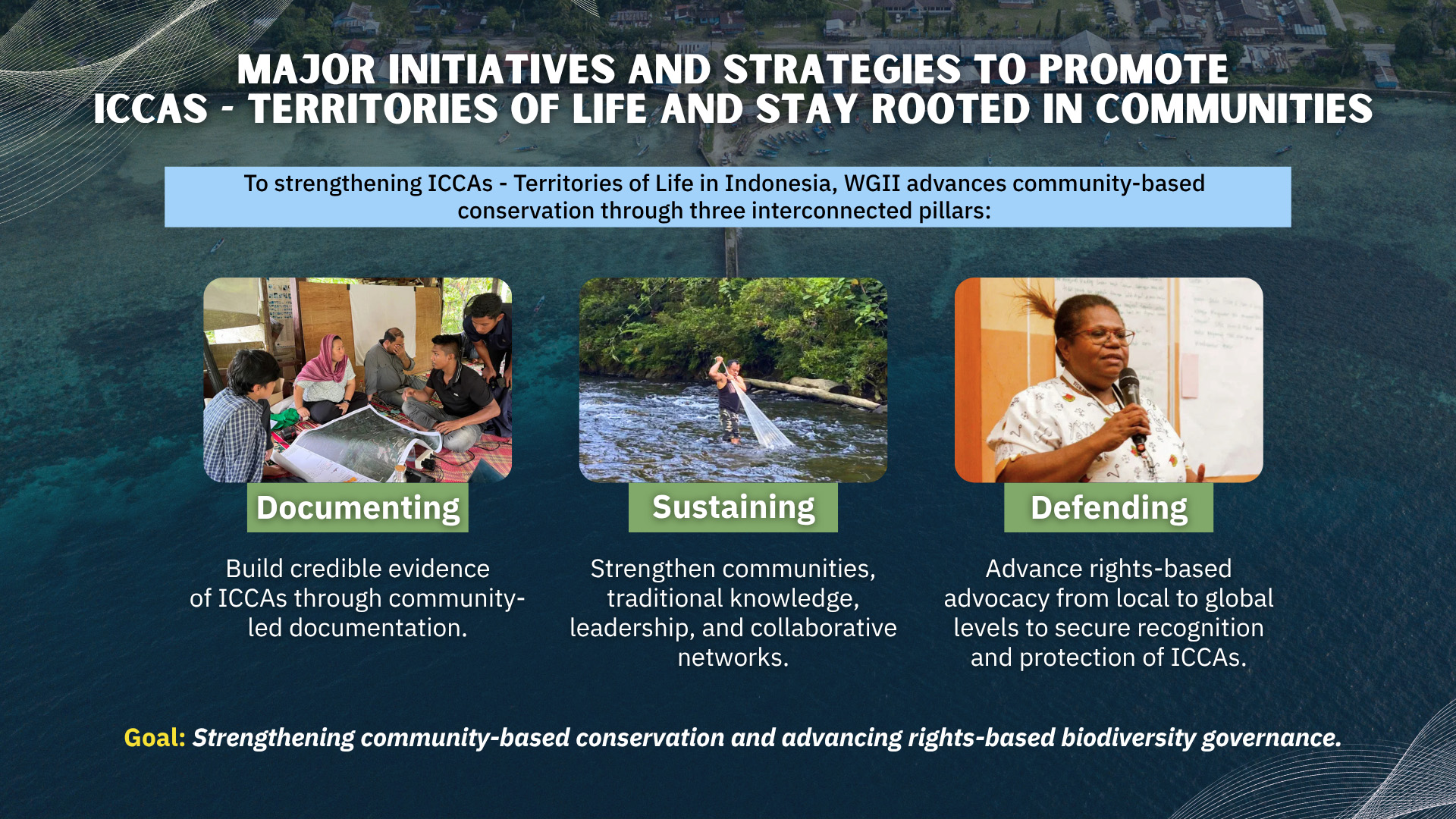
The network organizes its work around three pillars: documenting, sustaining, and defending ICCAs–territories of life. The network reports over 500 documented ICCA sites nationally, feeding into a web-based national registry and, increasingly, into government planning processes such as Indonesia’s Biodiversity Strategy and Action Plan. It emphasized that data sovereignty rests with Indigenous Peoples and Local Communities, and that Free, Prior, and Informed Consent (FPIC) protocols shape how and whether data is shared internationally. The 2023 establishment of the ICCA Custodian Network of Indonesia, Jaringan Pemangku Hak Areal Konservasi Kelola Masyarakat (JPH-AKKM), was also highlighted. JPH-AKKM is a network and platform that gives rights-holder communities themselves a direct voice, distinct from and complementary to civil-society-led PGKRN.
The open discussion, chaired by the Consortium’s Vice President Vololona Rasoarimanana, drew questions from participants across several countries. A participant from Spain’s national network asked how PGKRN vets communities seeking registry inclusion and how the national registry relates to the UNEP-WCMC global ICCA registry. Presenters explained that PGKRN relies on member organizations’ local chapters to cross-check applicants, builds on Indonesia’s long tradition of participatory mapping, and uses standardized documentation forms alongside a peer-review mechanism. On the global registry, they noted ongoing discussions with WCMC about endorsing Indonesia’s own platform rather than transferring sensitive community data outward, given FPIC considerations.
When asked what they considered as concrete policy wins, PGKRN presenters pointed to two examples: the presence of the Indonesian term AKKM (Areal Konservasi Kelola Masyarakat) in the new conservation law, a plausible contribution credited to PGKRN’s influence and work, noting that the academic paper underpinning the term’s definition draws on the Consortium’s own definition of ICCAs, and closer engagement with the Ministry of Environment and Forestry on CBD-related processes, on Article 8(j) and Indigenous Peoples’ rights. PGKRN presenters described such examples as meaningful gains while acknowledging that implementation gaps remain.
Brief presentations from comparative networks in other regions were also given space during the open discussion. In particular, shorter updates were shared from Spain (Iniciativa Comunales, a 52-member association with a governance structure weighted toward community votes over NGO/university votes, explicitly designed to prevent researcher or institutional capture) and India (a national working group formed in 2024 as a tighter, decentralized operational body beneath a broader national assembly). Full sessions for both will be featured in due course.
“National ICCA Networks have been too isolated for a long time. It is great that we are starting to have these sharing opportunities. We wish to have more exchanges with networks all around the world, colleagues facing similar issues. I am so happy that we have this now,” a participant shared.
Another participant added that the session “provided a learning space for dedicated efforts… and intricate processes throughout the years to showcase achievements in reaching a standardized level of advocacy for partners and networks.”
Before the session came to a close, congratulations were relayed to PGKRN for its work and to the organizers for facilitating the exchange.
Suggestions from the open discussion included plans to hold dedicated full-length sessions on Spain and India’s national networks, a possible session focused on European national networks, and a vision towards organizing an eventual gathering of national networks in person.
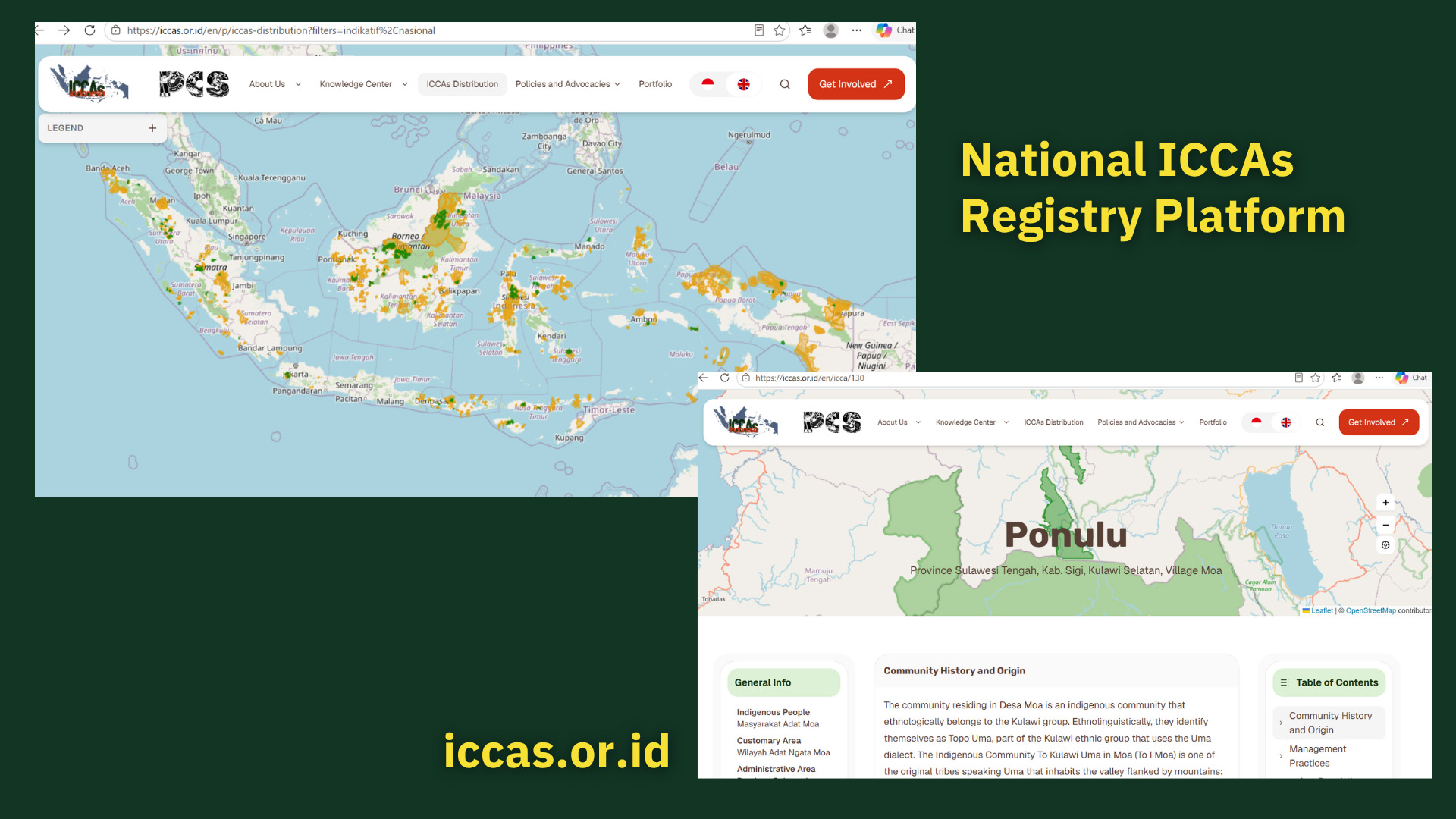
To learn more, read the full-feature article here: https://www.iccaconsortium.org/2026/07/01/perkumpulan-gerakan-konservasi-rakyat-nusantara/ and visit PGKRN’s website: https://iccas.or.id/en.