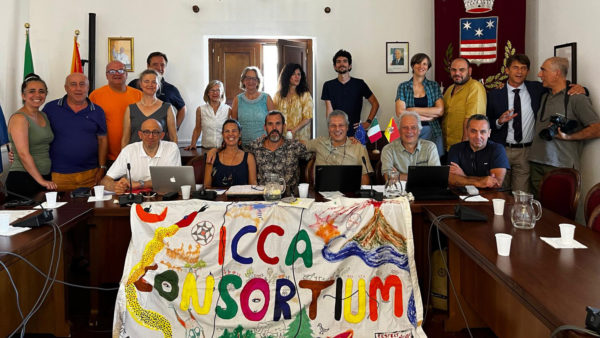
The main objectives of the assembly were to present the 2026-28 ICCA Consortium European Strategic Plan and Action Plan, and to discuss the next council member from Europe
First published on 12/22/2025, and last updated on 04/27/2026
By ICCA Consortium Europe
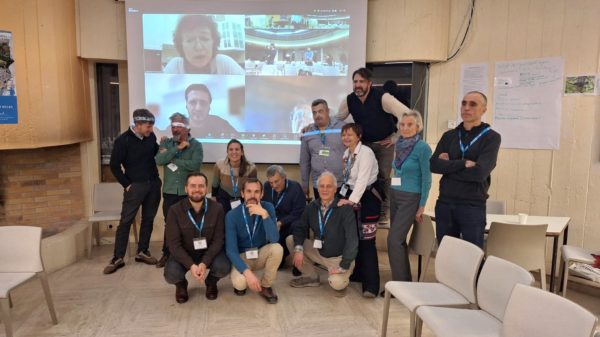
The 4th European Regional Assembly of the ICCA Consortium convened in Ljubljana on 27th November 2025. The Assembly was opened by Nevenka Bogataj, a member of the Slovenian Association of Commons, who welcomed the participants to her country and wished a fruitful meeting for all. She was thanked for her warm hospitality and for organizing the event.
Marco Bassi followed with an introduction to the ICCA Consortium and the purpose of the assembly, highlighting the importance of strengthening the Consortium membership in Europe. He described the process undertaken throughout 2025, during which, following the last Regional Assembly in Geneva, a European Coordination Team was created, under which we are now operating.
ICCA Consortium Europe
Eleonora Fanari, the ICCA Consortium’s Regional Coordinator for Europe, presented an overview of the Consortium’s European membership, detailing the number and types of both organizational and honorary members. In total, across Europe, the Consortium has 17 members (eight in Italy, four in Spain, one in Montenegro, one in Greece, one in Croatia) who work with local communities, and 11 members registered in Europe but who mostly work at the international level.
We also have 105 honorary members, coming from different parts of Europe, the majority from Spain, Italy, and the UK, followed by Switzerland, France, and Finland. Slovenia, Hungary, and Croatia each have only one honorary member, underscoring the importance of strengthening and deepening our relationship with these countries.
Eleonora presented the current members of the European Coordination Team, comprised of Sergio Couto (Spain), Manuel Lopes (Spain), Pablo Dominguez (Montenegro), Marco Bassi (Italy), Federico Bigaran (Italy), Gretchen Walters (France), Theodore Terkarfakis (Greece), Iris Benes (Croatia), and George Iordachescu (Romania).
Marco clarified the distinction between members and honorary members and stressed the need to expand active membership in Europe. He highlighted that the European Coordination Team serves as the Regional Council, as defined in the Governance Procedure (2.8 chapter). He highlighted that Europe remains underrepresented in the ICCA Consortium working groups.
A central challenge identified was how to effectively demonstrate conservation led by Indigenous Peoples and Local Communities within Europe. He emphasized the strategic value of the ICCA Registry. He shared two initiatives under consideration: (1) formal recognition of the European Coordination Team as the Regional Council, and (2) broadening the team’s roles to include thematic positions focused on defending, documenting, and policy work.
Olivier Hymnas raised concerns about urgent funding needs and underscored the importance of communication and awareness-raising, including the production of policy briefs on the Nature Restoration Regulation. He reported applications to the COST-Action program and the Biodiversa call, while acknowledging the difficulty of adequately consulting communities under tight funding deadlines.
Marco informed participants that his mandate on the ICCA Consortium’s global council, as regional representative from Europe, is ending and outlined the nomination procedures for a successor. No candidates have yet been put forward, though members have been invited to submit nominations, and the European Coordination Team will continue facilitating the process.

The European Strategic Plan 2026-28
Eleonora presented the draft ICCA Strategy for Europe, launching a one-month period for member comments. The strategy is structured around four main objectives: Governance, Self-Sustainability, Recognition, and Advocacy.
Governance requires consolidating and strengthening the ICCA Consortium Europe to ensure effective coordination, representation, and visibility at the European level. Self-Sustainability emphasizes the importance of developing a fundraising strategy and improving communication among members, honorary members, and allies. Under Recognition, the focus is on advancing the ICCA Registry in Europe, supporting communities in the registration process, and creating guidelines for the peer review process. Under Advocacy, discussions centered on the need to actively participate in European and international conservation and biodiversity events to shape and influence the conservation agenda in Europe and beyond, and promote the recognition of ICCA-territories of life. A detailed 2026–28 Action Plan was also presented, outlining concrete activities to achieve these goals.
In response to the presentation, Ted initiated a discussion of the definition of “community” within the ICCA framework, offering examples from Greece. In response, Marco emphasized the need to prioritize support for national networks, the registration of commons in the ICCA Registry, and the development of peer-review and support guidelines tailored for the European context. Manuel expressed appreciation for Eleonora’s coordination and reaffirmed his support. Sergio advocated for creating a European “alert system” to help communities facing external threats. At the same time, Ted highlighted contradictions in EU policies that support community rights abroad while overlooking systemic issues at home. Manuel further noted that the EU underestimates both the significance of the commons and the presence and relevance of Indigenous Peoples in Europe.
Slovenia Commons
The Assembly in Slovenia offered an excellent opportunity to know more about the Slovenian Association of Commons. A working dinner was organized, in which its representatives provided information on the challenges and the opportunity to restore the commons in Slovenia. The conversation provided a valuable opportunity to connect, exchange perspectives, and share our respective visions and missions. Through these conversations, we identified a strong alignment around common goals and recognized significant potential for collaboration between the organization and the ICCA consortium.
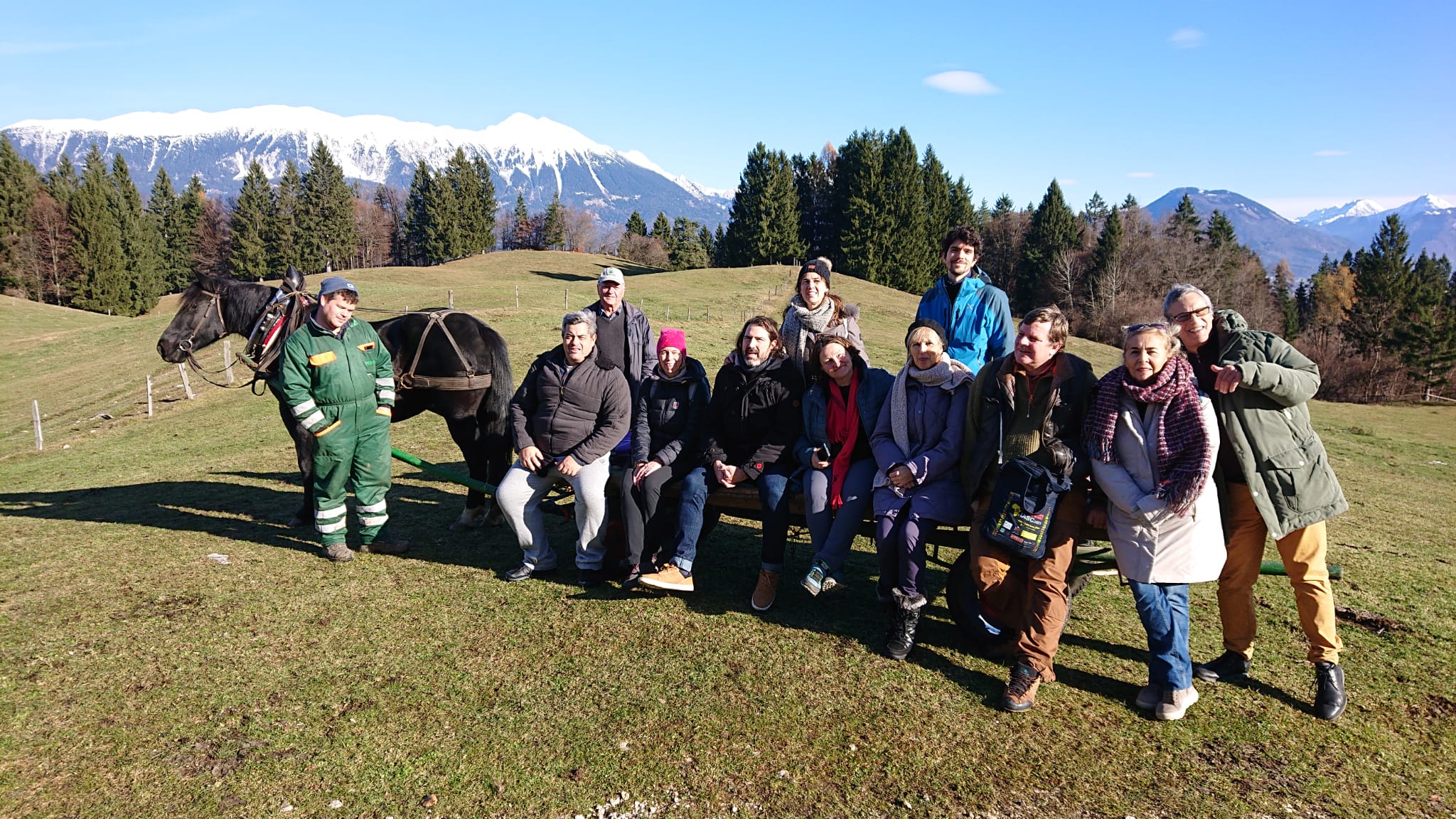
A moment of conviviality was organized during the field trip to the Zgornje Gorje common, near Lake Bled. This visit was a critical moment of exchange, during which we shared significant achievements, ongoing struggles, and current needs. Tomaž Bregant, the representative of the Poljšica-Gorje Common, explained to us the current Slovenian laws that support commons, the challenges they are facing, and the significant achievements. Amidst the good conversations, good wine, and local cheese, this exchange marked a significant step toward strengthening the relationship between the ICCA Consortium of Europe and the commons of Slovenia.
Celebrating 2026, the Year of Pastoralism in Montenegro
During these days of learning and conviviality, the European Coordination Team discussed the possibility of celebrating the International Year of Pastoralism in 2026 in Sinjajevina, Montenegro, during the traditional celebration of St. Peter, from July 10 to 12. Building on the strong motivation expressed by the commoners of Sinjajevina and their long-standing experience in hosting collective gatherings, we propose holding the 5th European Regional Assembly as part of this event. Bringing commoners from across Europe to Sinjajevina will create a unique space for connection, solidarity, and trust-building, grounded in lived experience at the very heart of a historic and deeply symbolic pastoral commons. This offers an exceptional opportunity for mutual learning, re-energizing the ICCA Consortium’s European network, strengthening relationships with existing and potential members, and showcasing the values and practices of commons governance in a powerful, embodied way.
Note: The 4th Regional Assembly was organized on the sidelines of the conference Discovering the Power of Nature at the Inštitut za sodobno zgodovino (Institute for Contemporary History). At the conference, several members of the ICCA Consortium European Coordination Team delivered talks. Marco Bassi also gave an introductory presentation on the concept of the ICCAs-territories of life in the European context.