A Petition Backed by More Than 100 Organizations Demands an End to Offshore Fossil Fuel Expansion Across Africa
First published on 06/24/2026, and last updated on 08/21/2026
By ICCA Consortium
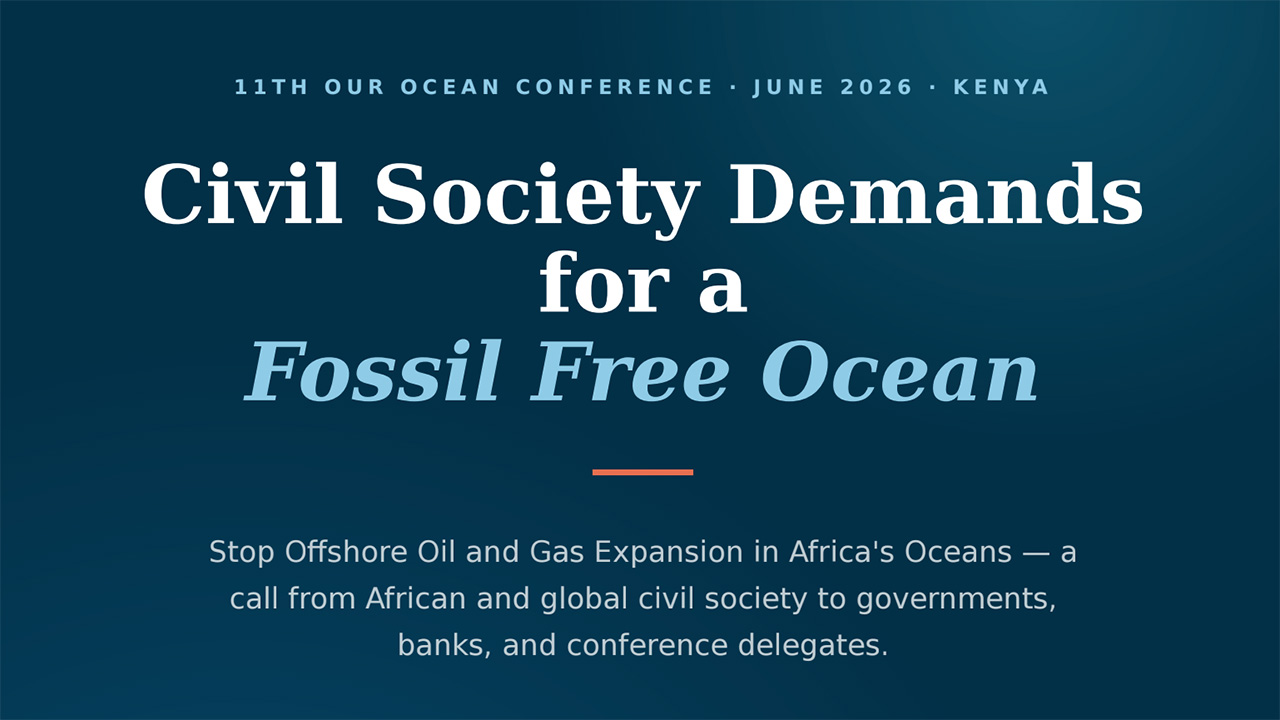
At the Our Ocean Conference held in Mombasa, Kenya, on June 16–18, 2026, which was the first edition of the conference held in Africa, fishers-fishworkers, civil society organizations, and activists gathered to raise the alarm about the accelerating expansion of offshore oil and gas extraction across the continent. ICCA Consortium member Natural Justice joined allied organizations in presenting a petition calling for a fossil-free ocean to conference delegates, governments, and financial institutions. For territories of life across marine and coastal zones worldwide, the demands in the petition echo longstanding calls for the recognition of community-based ocean governance.
The petition was submitted against the backdrop of a projected 176 offshore and onshore oil and gas projects planned across the African continent through 2030—developments communities say are advancing without their free, prior, and informed consent (FPIC). Endorsed by more than 100 organizations, the petition makes five demands:
- Stop new offshore fossil fuel expansion.
- Protect Africa’s oceans and marine biodiversity.
- Uphold human rights, livelihoods, and food sovereignty.
- End public financing for offshore fossil fuels.
- Reject false solutions and protect ocean systems.
The petition documents cases from several regions where extraction is already affecting Indigenous Peoples, fishing communities, coastal ecosystems, and customary governance systems.
In the Orange Basin, a geological region off the Namibian and South African coasts, new fossil fuel exploration licenses have been granted to international companies. In Botswana, the Kavango Basin, which encompasses over 13,000 square miles of the Okavango River catchment and borders the Okavango Delta UNESCO World Heritage Site, is under pressure from onshore oil and gas exploration without the FPIC of Indigenous communities, including the San and Topnaar, who depend on this ecosystem. In Mozambique’s Cabo Delgado, liquefied natural gas developments have exacerbated violence, displacement, and militarization in the region. In the Niger Delta, oil extraction has severely damaged artisanal fisheries, described in the petition as the backbone of West Africa’s livelihoods. In South Africa, seismic blasting associated with offshore exploration also continues to harm fishing communities and marine ecosystems.
Marine and coastal territories of life of Indigenous Peoples and Local Communities sustain biodiversity, food systems, cultural practices, and territorial governance that industrial extraction directly undermines. The petition grounds its demands in fundamental rights over livelihoods, territory, and self-determination. It states, “We are united in demanding an immediate stop to drilling in the ocean, no new offshore oil and gas, a fossil fuel phase-out, and protection of our ocean, people, and planet.”
As the first Our Ocean Conference held in Africa, the 2026 edition in Mombasa gave communities most affected by extraction on and around the continent’s coasts a direct platform before governments, multilateral institutions, and financial actors. The petition presented there is one expression of a wider movement asserting that decisions about Africa’s oceans cannot be made without the peoples who depend on them, and who have governed them long before the current wave of industrial extraction began.