Internal Governance and Legal Tools for Autonomy and Advocacy
First published on 05/05/2026, and last updated on 05/14/2026
By ICCA Consortium
Four indigenous associations— Organización Payipie Ichadie Totobiegosode (OPIT), Organización del Pueblo Enlhet Norte (OPEN), Asociación Angaité para el Desarrollo Comunitario (ASADEC), and Asociación de Comunidades Ava Guaraní del Alto Paraná (ACIGAP)— now have updated bylaws, along with the procedures needed to obtain or regularize their legal status.
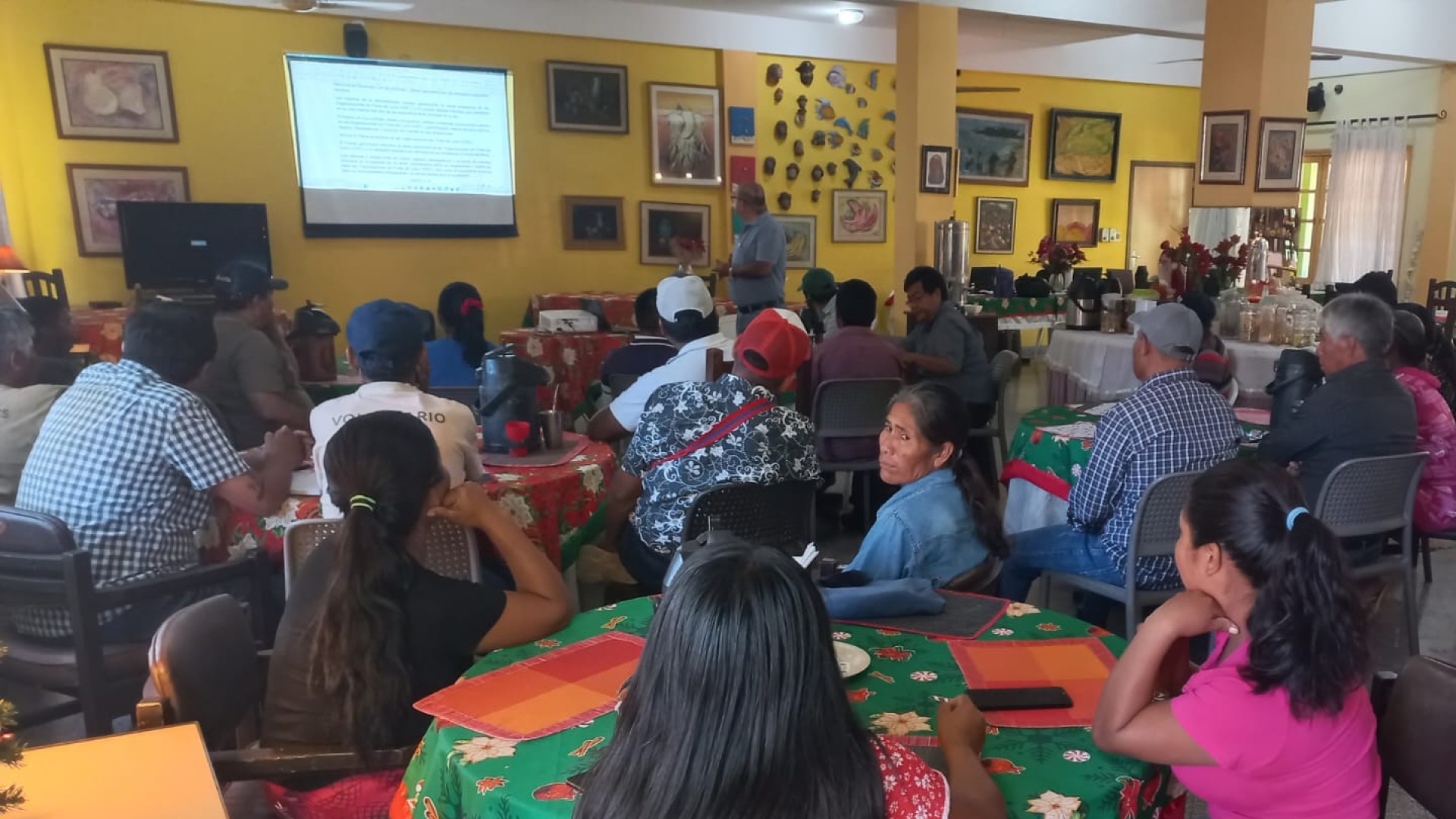
The Federación por la Autodeterminación de los Pueblos Indígenas (FAPI), a member of the ICCA Network, facilitated this strategic process in collaboration with the four associations through community assemblies, participatory workshops, and technical and legal support.
These organizations are now better prepared to exercise their autonomy, manage their own processes, and establish formal relationships with public institutions, partner organizations, and potential funding sources. This progress not only improves their administrative capacity but also strengthens their ability to defend their territories.
In Paraguay, one of the main challenges Indigenous Peoples face is not only pressure on their territories but also the need to organize themselves formally so they can engage with the state and other actors on equal footing. Although communities have legal recognition, when they organize collectively—as in the case of inter-community associations—they must comply with complex requirements under the national legal framework to access rights, funding, and advocacy spaces. With stronger legal frameworks in place, these organizations can now access restoration programs, build strategic partnerships, and participate in decision-making processes that were previously out of reach. In a context where the recognition of “territories of life” as conservation mechanisms remains limited, this progress represents a concrete step toward their legitimization.
In this regard, one of the most significant examples is OPIT. This organization, which represents communities in initial contact and aims to protect Indigenous Peoples in voluntary isolation, had been operating without a statute aligned with its reality. Through this process, it reorganized its structure, formed a new steering committee, and moved toward legal formalization, strengthening its capacity to act.
According to a leader of the Ayoreo Totobiegosode people, having legal status “allows us to seek support to guarantee the safety of our brothers and sisters living in voluntary isolation and to preserve our territories for future generations.” This statement highlights the direct link between organizational strengthening and the protection of territories of life.
This experience offers a key lesson for the ICCA movement: defending territories of life depends not only on external recognition but also on the internal strengthening of the organizations that sustain them. In this regard, the process led by FAPI provides a concrete example of how Indigenous governance, combined with strategic legal tools, can serve as a strong foundation for self-determination and rights-based conservation.