Stories of Governance, Care, and Resilience from Pastoral Communities
First published on 09/28/2026
By ICCA Consortium
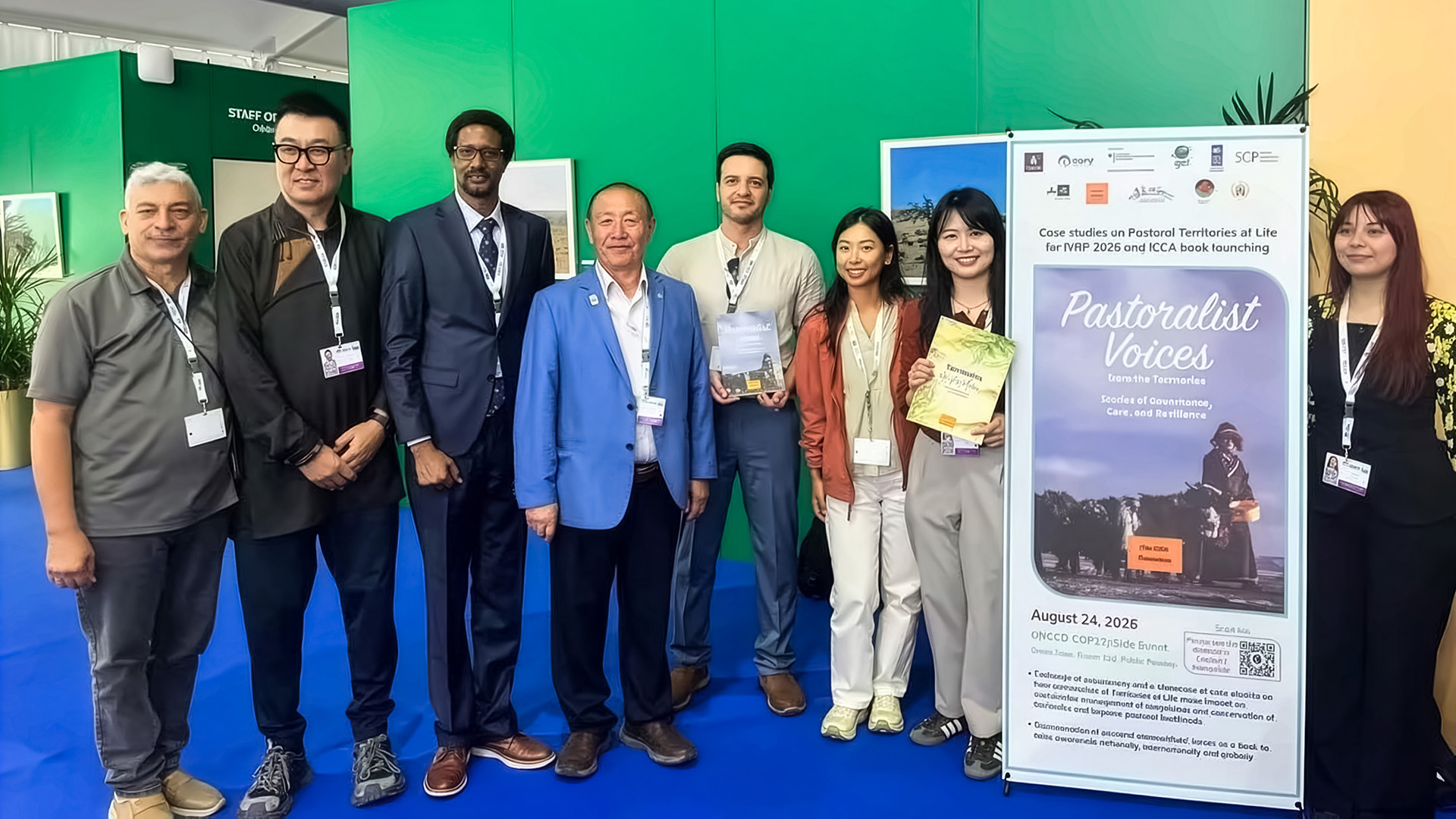
During the seventeenth session of the Conference of the Parties to the United Nations Convention to Combat Desertification (UNCCD COP17), a case-sharing event brought together experiences from pastoral communities and their partners around the governance, care, and stewardship of pastoral territories of life.
The event was jointly organized by the ICCA Consortium, the Environment and Development Association JASIL in Mongolia, and Shan Shui Conservation Center, with support from the Global Environment Facility’s (GEF) Small Grants Programme (SGP) under the United Nations Development Programme (UNDP).
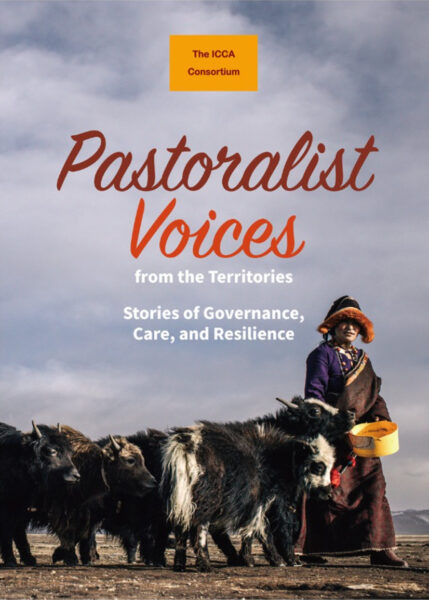
At the heart of the event was Pastoralist Voices from the Territories: Stories of Governance, Care, and Resilience, a collection prepared by the ICCA Consortium in the context of the International Year of Rangelands and Pastoralists (IYRP 2026) and UNCCD COP17. The collection brings together pastoral community stories from different regions, showing how pastoralists govern, care for, and sustain their territories while responding to climate change, land degradation, changing land use, and livelihood pressures.
Read Pastoralist Voices from the Territories →
Listening to Pastoralist Voices and Understanding Territories of Life
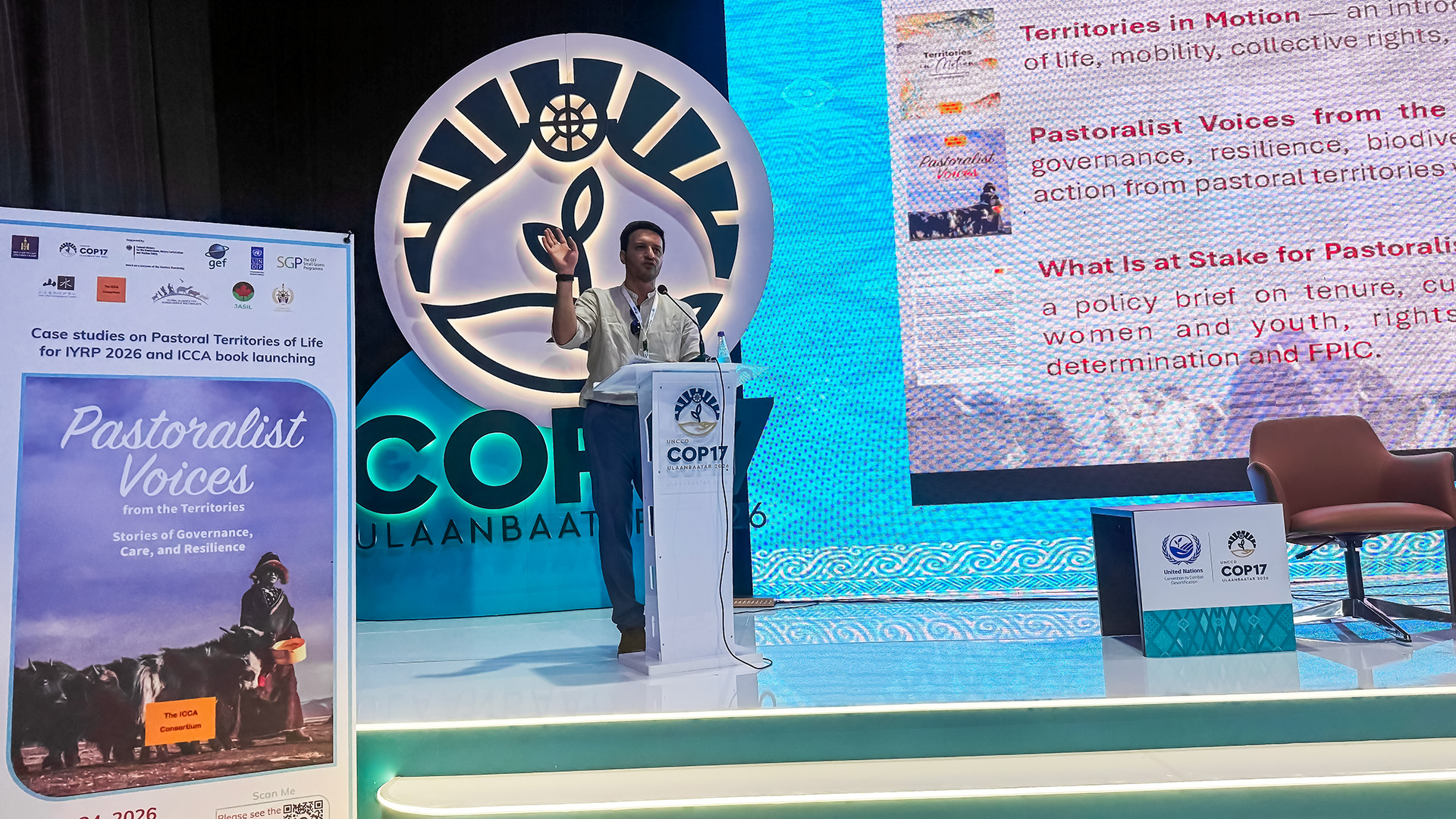
Dr. Ali Razmkhah, Global Coordinator of the ICCA Consortium, opened the session by introducing the publication and its broader context. The book Pastoralist Voices from the Territories brings together stories from pastoral communities and places the voices of pastoralists at the center. The collection explores relationships between people, land, water, animals, and community, as well as the governance systems, cultural practices, and everyday forms of care that sustain these relationships.
The stories show that pastoral territories are living spaces where livelihoods, culture, social relationships, and ecological systems are closely interconnected. Seasonal mobility, rotational grazing, resource sharing, and collective decision-making can all play important roles in responding to environmental variability and sustaining landscape resilience.
At the same time, the stories present pastoral communities as dynamic and diverse, and they also document the pressures communities face, including climate change, prolonged drought, grassland degradation, land conversion, insecure tenure, and external policies or development projects that may not adequately involve local communities in decision-making. It is through these specific places and experiences that pastoralist governance, care, and resilience become visible.
Gyatong Grassland, China: Community-led Restoration and Livelihood Resilience
Ding Chen from the Shan Shui Conservation Center shared the experience of the Gyatong Grassland in Chengduo County, Yushu Tibetan Autonomous Prefecture, Qinghai Province.
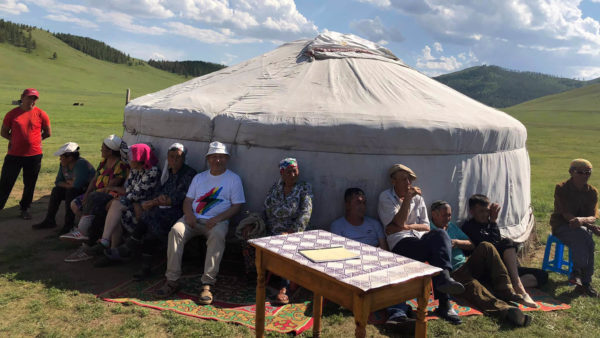
Tibetan pastoralists in Zhenqin No. 2 Village have long relied on yak herding, alongside sheep and horses. Guided by seasonal observations and customary ecological knowledge, herders collectively manage four seasonal pastures through rotational grazing.
In response to climate impacts and grassland degradation, the community has developed a co-management approach with the Shan Shui Conservation Center and local authorities. Elders, herder representatives, and a community co-management committee participate in conservation decisions, while local herders also contribute directly to biodiversity monitoring through camera traps, transects, and GPS tracking.
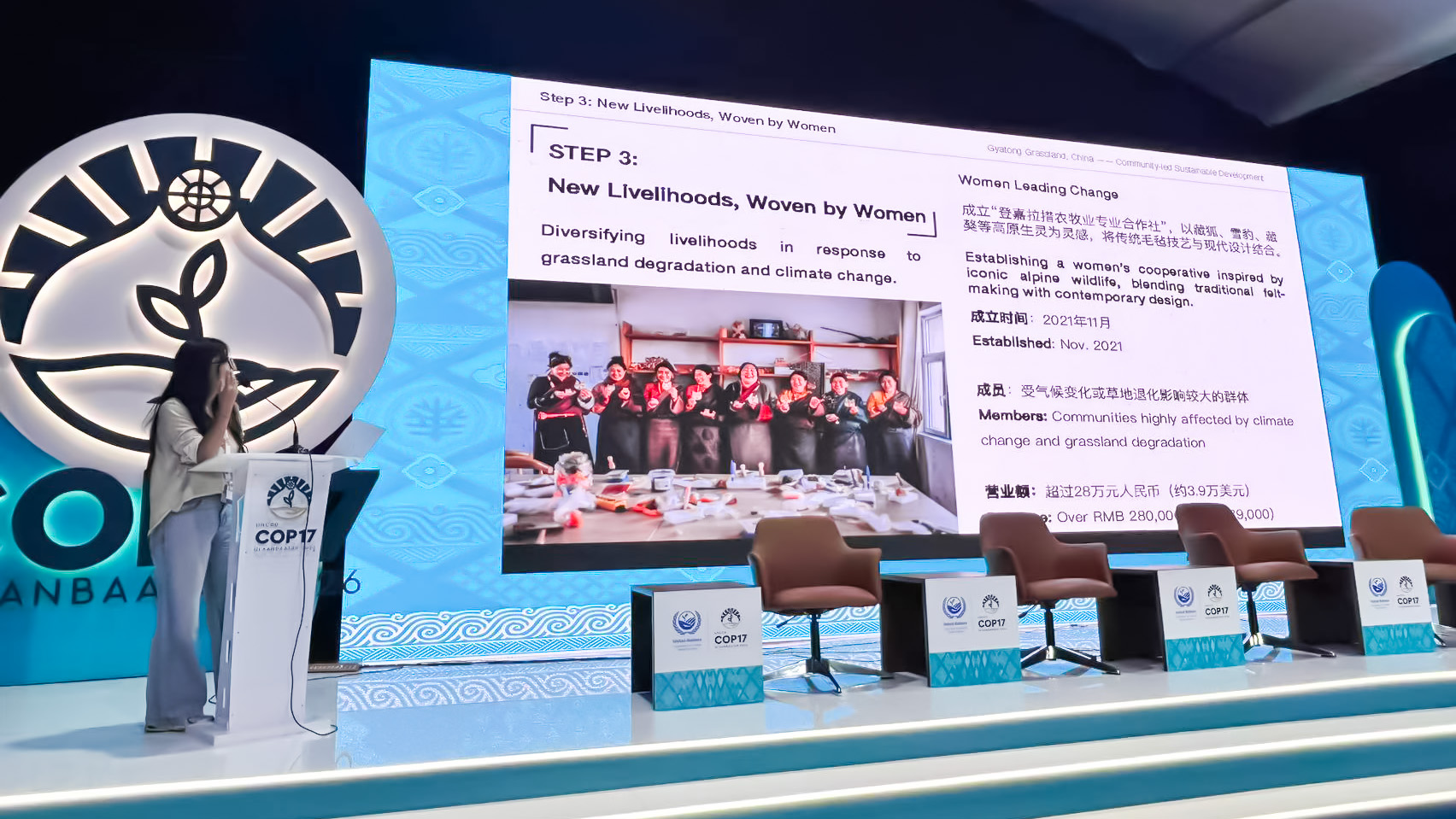
Since 2021, the community has restored more than 150 hectares of degraded alpine meadow through reseeding, soil improvement, and seasonal protection measures. The community has also been strengthening livelihood resilience through women-led wool handicraft initiatives and climate adaptation measures such as winter fodder storage.
The Gyatong experience demonstrates how community participation can form the foundation of ecological restoration. Rather than being designed entirely from outside, conservation actions have developed through dialogue with existing community knowledge, institutions, and livelihood needs.
Sinjajevina, Montenegro: Defending Mountain Commons and Community Participation
Milan Sekulovic shared the experience of Sinjajevina in Montenegro, one of Europe’s important mountain pastoral landscapes. Around 240 pastoral households continue to use the area’s summer pastures. For centuries, seasonal transhumance and the institution of the katun have connected highland settlements, shared grazing areas, and collective labor.
Governance of these mountain commons is rooted in customary institutions. Community assemblies and elders have traditionally coordinated access to grazing areas, pasture rotation, seasonal mobility, and conflict resolution. Water resources, which are particularly scarce in the highlands, are also managed through collective rules designed to ensure equitable access.
In 2019, plans to establish a military training ground without adequate community consultation sparked the Save Sinjajevina movement. Through sustained community mobilization, the proposal was eventually cancelled.
The Sinjajevina experience shows that protecting pastoral landscapes is not only a question of ecological management. It is also about land rights, commons governance, and the right of communities to participate in decisions that affect their territories. When external development projects enter long-established pastoral landscapes, the question of who has a voice in determining the future of the land becomes fundamental.
Bayanbulag, Mongolia: Linking Customary Governance with Co-Management
Hijaba Ykhanbai of the Environment and Development Association (JASIL) presented the Bayanbulag ICCA in Mongolia. Located in Mukhar Valley, Tuv Province, Bayanbulag is a semi-nomadic pastoral territory of life sustained by 12 pastoral households. Seasonal mobility, kinship, and neighborhood networks remain central to relationships within the community and with the territory.
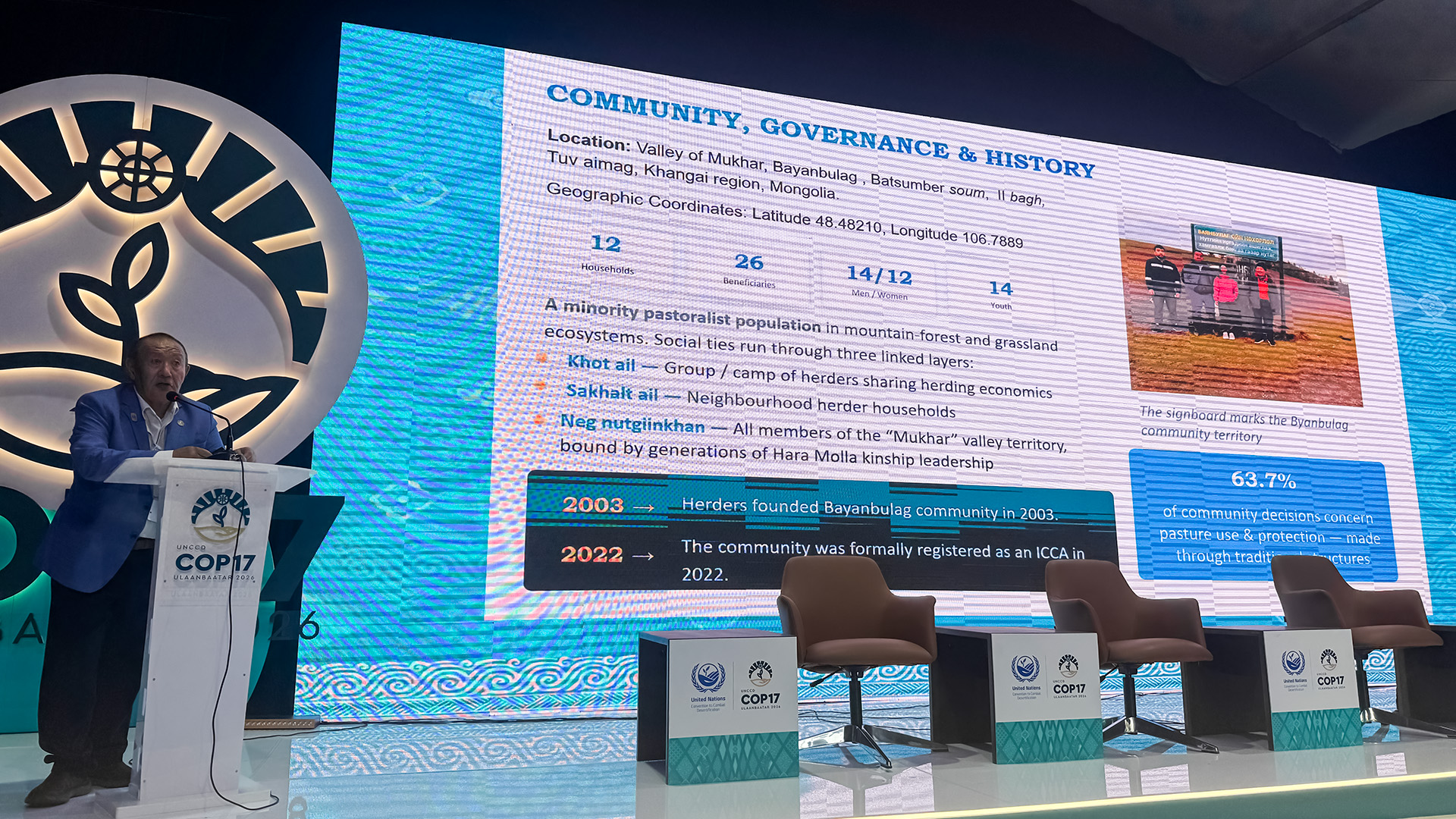
A distinctive feature of Bayanbulag is the combination of customary governance with legally recognized co-management arrangements. Through agreements with the local government, the community has secured recognized management responsibilities over 1,130 hectares of seasonal pasture and 1,175 hectares of forest resources. Traditional decision-making continues to guide pasture rotation, resource sharing, and conservation practices.
The community also adjusts seasonal movements and herd sizes according to ecological capacity, while protecting water sources, managing forests, and participating in wildlife monitoring. These efforts have contributed to the recovery of species such as Siberian roe deer and Pallas’s cat.
In response to water scarcity, land-use pressures, and youth outmigration, the community has strengthened livelihood resilience through women-led dairy initiatives and improved market access. Voluntary herd reduction by 50%, combined with increased milk production, has helped improve household incomes while reducing pressure on ecosystems. Bayanbulag demonstrates how customary governance and formal co-management can work alongside one another, and how communities can pursue ecological and livelihood goals through locally driven choices.
Chagannuur, China: Pastoral Stewardship for Migratory Bird Conservation
Baijin from the AEI Ecological Environment Volunteers Association shared the experience of the Chagannuur community in Abaga Banner, Inner Mongolia. Chagannuur is a pastoral landscape where grasslands, wetlands, and migratory bird habitats are closely interconnected. Chagannuur Lake and its surrounding saline-alkaline wetlands, sandy grasslands, and pastures provide important breeding and stopover habitats for white-naped cranes, red-crowned cranes, and other migratory waterbirds.
Local livelihoods are mainly based on cattle and sheep husbandry. Although most herders shifted towards settled pastoralism from the 1990s onwards, traditional ecological knowledge and cultural practices of coexistence with wildlife continue to shape everyday life. Customs such as avoiding disturbance to birds and protecting nests have contributed to long-term coexistence between people and wildlife.
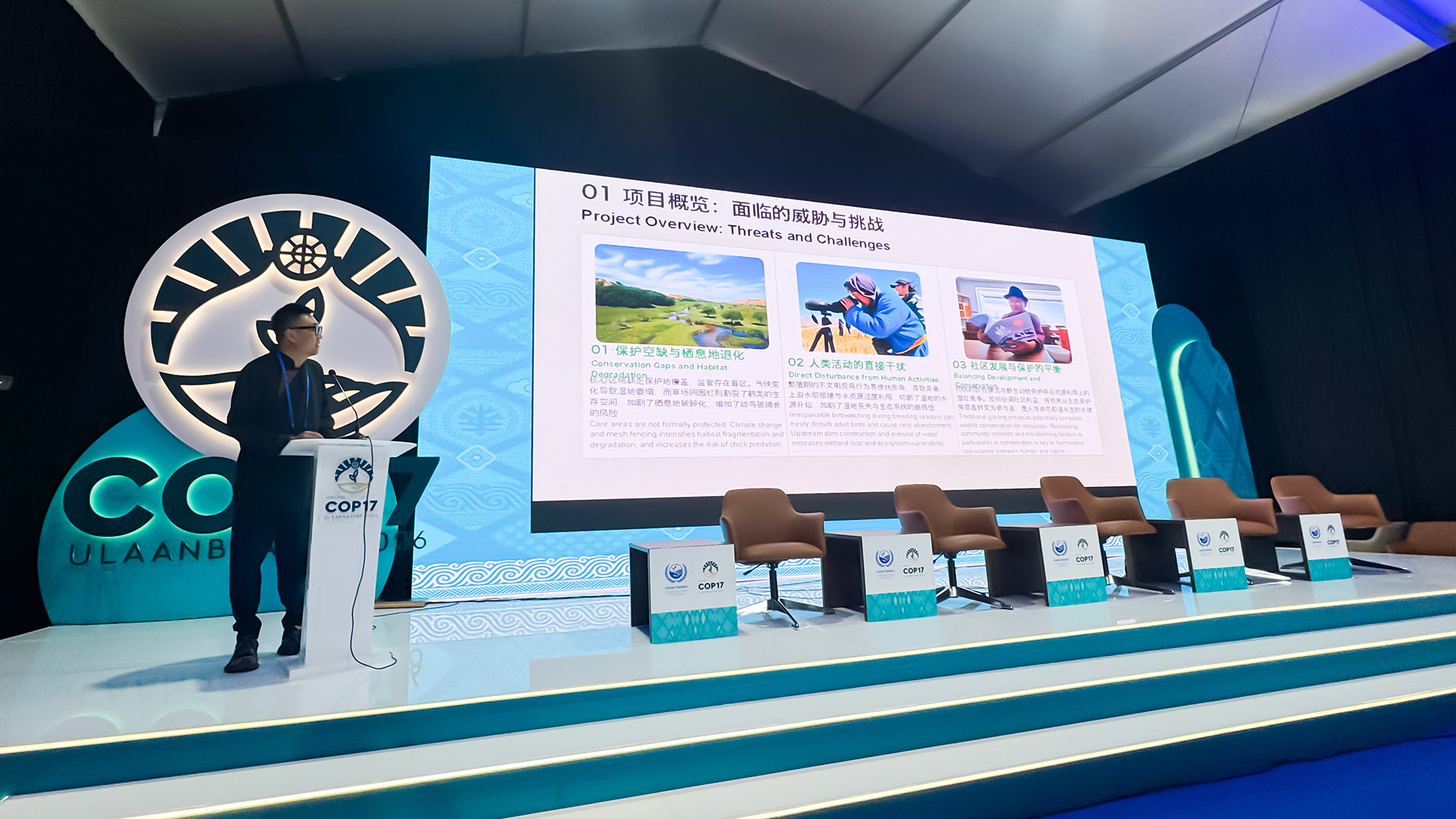
Facing drought, wetland degradation, desertification, renewable energy development, and tourism pressures, local communities have participated in vegetation restoration and the rehabilitation of degraded saline lakebeds. Over the past two decades, more than 6,800 hectares of dried lakebed have been re-vegetated. Herders also participate in bird monitoring, habitat mapping, and environmental education, while exploring livelihood diversification through handicrafts, homestays, and nature-based tourism.
The Chagannuur story demonstrates that biodiversity conservation does not take place only within formally designated protected areas. In pastoral landscapes, conservation can also happen through the everyday practices of people who live, work, and coexist with wildlife in these territories.
Turkana, Kenya: Mobility and Resilience in an Uncertain Dryland
Paul Saing’eu, East Africa and the Horn of Africa Regional Coordinator for the ICCA Consortium, shared the experience of Turkana pastoral communities in northwestern Kenya. Turkana pastoralists live in an arid environment characterized by highly variable rainfall, limited water availability, and considerable environmental uncertainty. Cattle, goats, sheep, camels, and donkeys are not only central to livelihoods but also to cultural identity and social organization.
Pastoral production depends heavily on seasonal mobility. Herders adjust migration routes according to rainfall, pasture, and water availability, travelling longer distances towards permanent water sources during dry periods. Herd-splitting strategies help households distribute risk, while drought-adapted species such as camels and goats provide additional resilience. Governance is rooted in customary institutions. Councils of elders regulate access to grazing areas, water points, and migration routes through social norms, reciprocal arrangements, and conflict-resolution mechanisms.
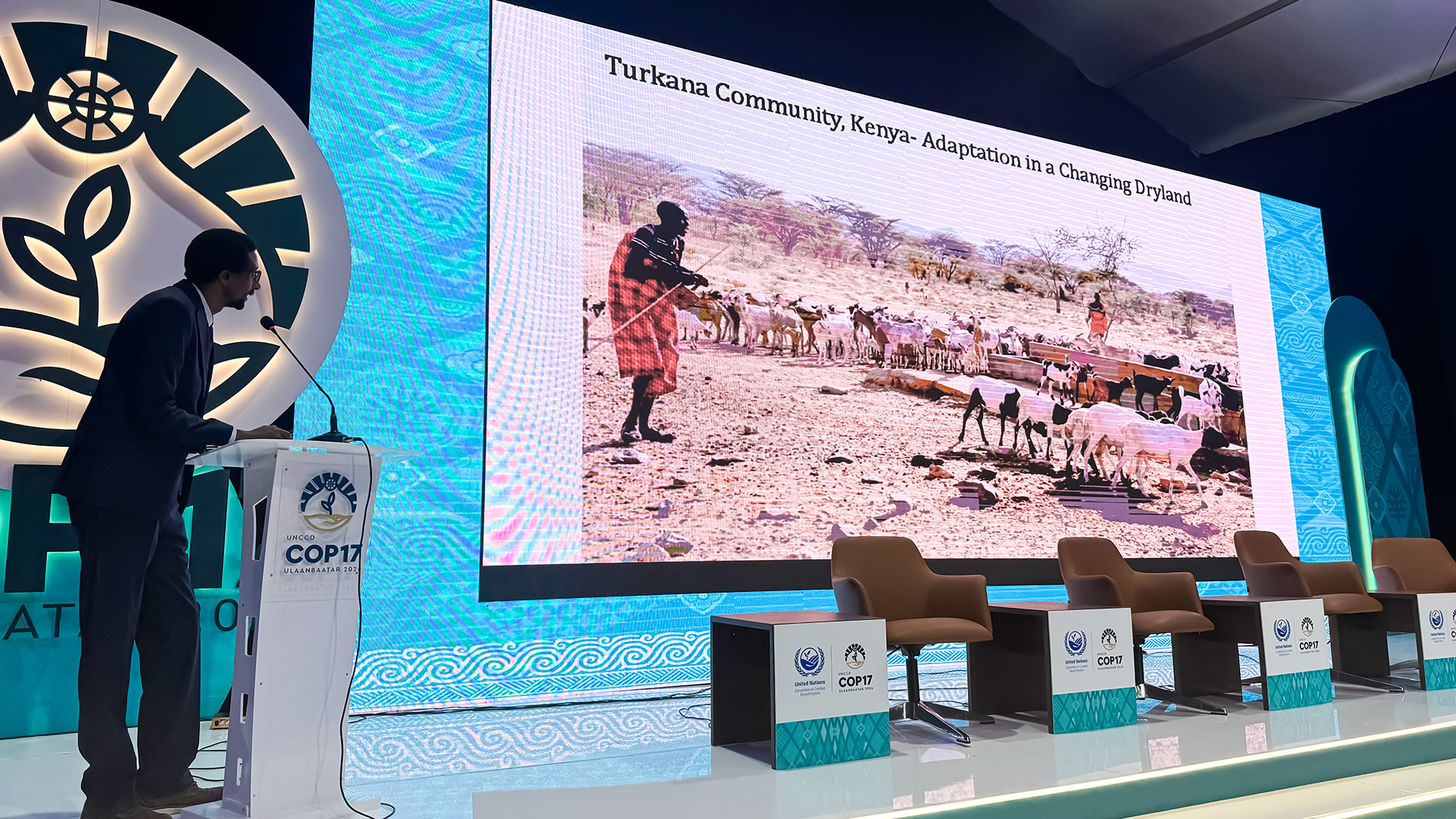
In this context, mobility itself functions as a form of governance. It allows communities to respond to changing resource conditions, distribute grazing pressure, and create opportunities for rangeland recovery.
Today, climate change, prolonged drought, land fragmentation, infrastructure development, extractive activities, and resource conflicts are creating new pressures. Communities are responding by strengthening customary governance, maintaining negotiated resource-sharing systems, restoring rangelands, and improving collective water management, while also making use of new climate information services. The Turkana experience shows that, in highly variable dryland environments, mobility is not an unplanned way of life. It can be a sophisticated system of risk management, ecological adaptation, and resource governance.
Bringing Pastoralist Voices Into Wider Conversations
The book launch and case-sharing event brought together stories from China, Mongolia, Montenegro, and Kenya to explore how pastoralists live with, govern, and care for their territories. These stories demonstrate the diversity of ways pastoral communities respond to ecological change, social transformation, and external pressures: maintaining mobility, restoring rangelands through collective management, defending commons, strengthening community governance, or developing new livelihood opportunities while sustaining long-standing relationships with the land.
Pastoralist Voices from the Territories: Stories of Governance, Care, and Resilience seeks to make these community-level experiences and voices more visible. It documents not only what pastoralists do but also how they understand their territories, organize their communities, and navigate change.
Further Reading: From Community Stories to a Broader Global Perspective
The case-sharing event formed part of the ICCA Consortium’s wider work around UNCCD COP17 and the International Year of Rangelands and Pastoralists (IYRP 2026).
Alongside Pastoralist Voices from the Territories, the ICCA Consortium has also published Territories in Motion: Pastoralist territories of life in a Changing World. This publication brings together stories from Asia, Africa, Europe, and Latin America and explores broader themes including pastoral mobility, collective tenure, customary governance, biocultural values, and pastoralist rights.
Read Territories in Motion: Pastoralist Territories of Life in a Changing World →
The two publications approach pastoral territories from complementary perspectives: Pastoralist Voices from the Territories centers community stories and pastoralist voices, while Territories in Motion draws out broader themes and experiences emerging across different pastoral territories.