By Jennifer Kelleher, IUCN GPAP
As part of the ongoing project entitled Global Support Initiative for Indigenous Peoples and Community Conserved Areas (GSI-ICCA), a three day workshop took place in Arusha, Tanzania in from the 26th until the 28th of April 2018. This was approximately one year after the initial workshops on Governance of Protected and Conserved Areas in Tanzania and on ICCAs in Tanzania (Dar es Salaam, 21-23 March, 2017) providing added value to both. The workshop was once again co-convened by several partners in the GSI-ICCA project: IUCN, UNDP-GEF Small Grants Programme, the ICCA Consortium and the appointed catalytic organization to the project, the Tanzanian Natural Resource Forum (TNRF), who are about to begin their ICCA national strategic initiative to be implemented in Tanzania.
A key objective of the workshop was to advance national policy and practice in line with the global awakening of interest in community conserved areas as “other effective area-based conservation measures” (Aichi Target 11). The workshop looked at the current status of ICCAs in Tanzania, both in terms of legal recognition and other forms of recognition and support, in order to diagnose the needs for improving recognition and providing targeted support. To this end, the workshop examined the governance situation of five “effective community-conserved sites” that take advantage of diverse legal and policy mechanisms for their official recognition and support in Tanzania. The participants were exposed to lessons learned in various contexts and used these to draw conclusions for concrete action and policy recommendations in the country. The five case studies of community conserved areas in Tanzania were:
- Applying the “Certificate of Customary Right of Occupancy” (CCRO): The Hadza community
- A traditionally protected community forest: Suledo Forest in Kiteto district
- A Village Land Forest Reserve (VLFR): The community forest in the Mpingo Conservation and Development Initiative
- The Wildlife Management Area (WMA) model: Burunge WMA
- A unique model of resource management through the exchange of indigenous knowledge and practice: Lake Nyasa and the Mbamba bay area
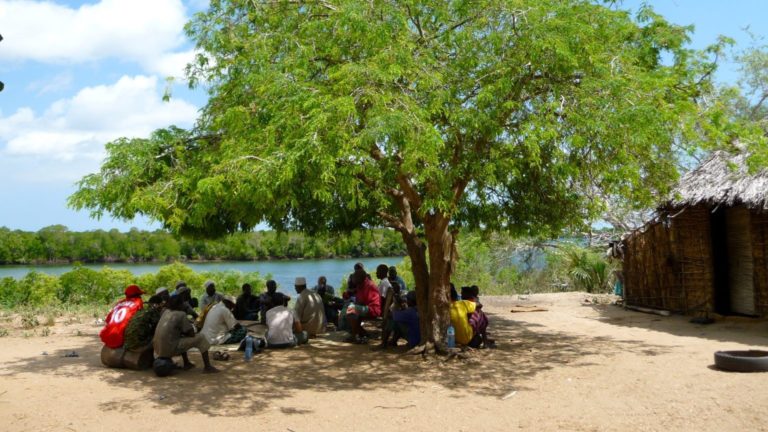
Each case study provided a unique look at a site governed, managed and conserved by a local community. The five sites shared – to various degrees — the following characteristics that concur to identify ICCAs: 1. the presence of a close-knit community with a strong and profound connection with its territory and natural resources; 2. the presence of a community institution in charge of taking and enforcing decisions/ rules either de jure and/or de facto; and 3. the fact that such decisions/ rules result in the conservation of nature and cultural values of the community together and their well-being. The case studies illustrated examples such as Sengu — where a traditional governance system still functions well today; Ngolo— where a traditional cultivation system conserves the soil and the moisture to allow for sustainable use and restoration; community by-laws to ensure marine conservation in and around Pemba island; the Alalili system (preservation, restoration and sustainable use) applicable in community forests; amongst other innovative approaches.
The discussions practically informed two on-going initiatives: the strategic work of the national catalytic initiative in support of ICCAs, and the on-going development of governance assessment for protected and conserved areas in Tanzania, sustained by a volunteer working group chaired by Emmanuel Sulle and technically supported by the IUCN. More broadly, the workshop was held to share experiences and enhance capacities among key actors regarding governance issues and ICCAs in Tanzania.
Please see the following links for further information on the GSI-ICCA project, the work of the ICCA Consortium and the TNRF.
-
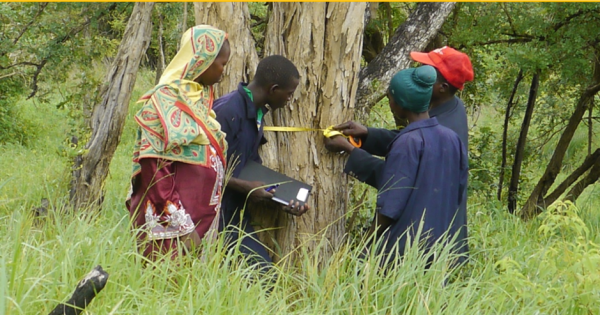
- (c) Mpingo Conservation and Development Initiative
-
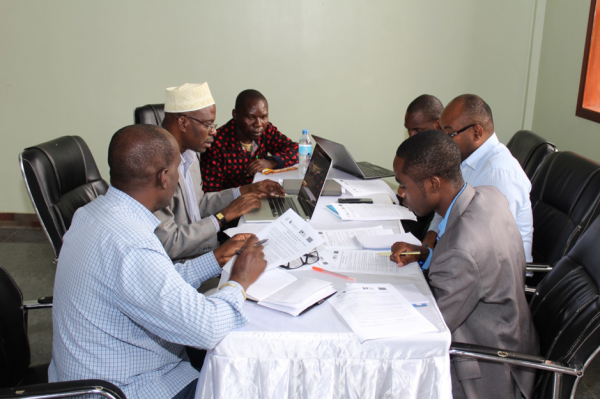
- (c)TNRF