In the Democratic Republic of Congo, ANAPAC-RDC denounces a project developed without consultation and free, prior, and informed consent

First published on 07/28/2026
Shared by the ICCA Consortium based on information from ANAPAC-RDC
In early June 2026, the National Alliance for the Support of Indigenous and Community Conserved Areas and Territories in the DRC (Alliance nationale d’appui et de promotion des aires et territoires du patrimoine autochtone et communautaire en RDC — ANAPAC-RDC) published a legal analysis on the Kivu-Kinshasa Green Corridor (Couloir vert Kivu-Kinshasa — CVKK). Created by decree in January 2025, this vast conservation area is presented as the largest protected area in Africa.
Carried out with the technical and financial support of the Indigenous Peoples’ Rights International (IPRI), the study questions whether Indigenous Pygmy Peoples were taken into account in the design of the Green Corridor, as well as the guarantees provided to protect their rights.
“The Kivu-Kinshasa Green Corridor and the Protection of the Human Rights of Indigenous Pygmy Peoples, Their Traditional Territories and Their Means of Subsistence in the Democratic Republic of Congo”
A Giant Corridor Crossing Nine Provinces
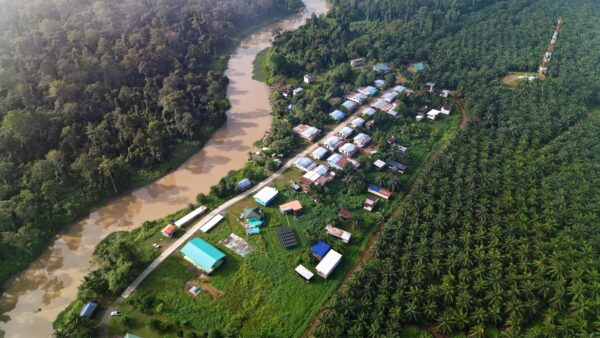
The Kivu-Kinshasa Green Corridor originates from Law No. 24/020 of December 30, 2024, which amends the Congolese legal framework relating to nature conservation. Its implementing decree, signed on January 15, 2025, establishes a new category of protected area intended to function as a community reserve. With an announced surface area of more than 100,000 km², the corridor crosses nine provinces and 42 administrative territories. Its route links the east of the country, around Beni, to the capital Kinshasa, notably following National Road No. 4 and the Congo River basin. According to ANAPAC, seven of the nine provinces concerned are home to Indigenous Pygmy communities, who have inhabited and managed these forest territories and natural resources for generations according to their own customary systems.
A Legal Advance Out of Step With the Method Used
One of the findings highlighted by ANAPAC lies in the contrast between the innovations introduced by the 2024 reform and the conditions under which the project was reportedly developed. The new law does indeed mark a significant development by integrating, for the first time in Congolese law, the concepts of “Indigenous Peoples” and “Local Communities.” It also aligns with the DRC’s international commitments on biodiversity and conservation. However, according to the organization, the communities concerned were not involved in preparing the corridor.
The analysis indicates that no participatory mapping, in-depth socio-economic study, or process of free, prior, and informed consent (FPIC) preceded the creation of the protected area. Indigenous organizations, their representatives, and several sectoral administrations were also reportedly not consulted.
This criticism echoes that made by the Consultation Framework of Civil Society Organizations and Indigenous Peoples on Biodiversity (COSPAB). In a note published in August 2025, this platform considered that the revision of the law had been carried out on a particularly fast timetable, leaving the competent parliamentary committees insufficient time to thoroughly examine the text before its adoption.
Governance Raising Concerns
Beyond the question of consultation, ANAPAC is concerned about the management arrangements planned for the Kivu-Kinshasa Green Corridor. The decree entrusts management of the project to the Congolese Institute for Nature Conservation (ICCN), the body responsible for administering the country’s main protected areas.
However, according to the study, relations between the ICCN and some Indigenous and Local Communities remain tense due to past experience with other conservation projects. Several organizations cite in particular the displacement of populations, expropriations, and restrictions on access to natural resources in other protected areas. For the authors of the analysis, this history is now feeding persistent distrust toward a project that nonetheless aims to promote so-called community-based conservation.
Risks of Conflict Linked to Overlapping Land Uses
The study highlights the complexity of the territories concerned. The corridor’s route encompasses areas already allocated to various uses: community forests, mining concessions, oil blocks, industrial forestry concessions, agricultural zones, and other protected areas.
According to ANAPAC, this overlap risks provoking major land and institutional conflicts if the rules governing land allocation are not clarified beforehand. The organization also points to inaccuracies in the decree, such as a reference to a “territoire de Butembo” (Butembo territory), which does not exist within the DRC’s official administrative framework. The analysis also notes that future conservation-related restrictions could conflict with other public policies, particularly in the mining, forestry, and agricultural sectors.
Proposals to Correct the Project Rather Than Abandon It
Despite these criticisms, ANAPAC is not calling for the abandonment of the Kivu-Kinshasa Green Corridor. On the contrary, the organization believes the project could contribute to biodiversity conservation, provided its implementation is substantially reoriented.
Among the key recommendations is the effective recognition of the land rights of Indigenous Peoples and local communities. ANAPAC advocates carrying out participatory mapping, biological inventories, and socio-economic studies to precisely identify the territories and Indigenous Peoples concerned.
ANAPAC also proposes establishing community management committees with genuine decision-making power, with the ICCN mainly providing technical support rather than acting as the exclusive manager.
The study further recommends developing economic activities compatible with conservation (agroforestry, beekeeping, ecotourism), as well as ecological restoration programs based on the use of local species.
Finally, the organization calls for the creation of an accessible grievance mechanism, a transparent system for sharing the project’s benefits, and a regulatory framework that explicitly strengthens the right to FPIC in protected areas, Other Effective Area-Based Conservation Measures (OECMs), and Indigenous and Community Conserved Areas and Territories (ICCAs).
A Question Still Unresolved
The analysis highlights a legal point often overlooked in public debate: Article 4 of the decree stipulates that the creation of the Kivu-Kinshasa Green Corridor does not automatically infringe upon the pre-existing rights of local communities, Indigenous Peoples, or other rights holders. For ANAPAC, this provision offers room for action ahead of the upcoming zoning and land allocation phases. According to the organization, it is essential that the effective participation of Indigenous Pygmy Peoples be guaranteed at this key moment, so that decisions concerning their territories are not made without their involvement.