Commemorating the International Day of the World's Indigenous Peoples through frontline accounts of territorial defense and the fight against epistemic extractivism
First published on 08/26/2026
ICCA Consortium
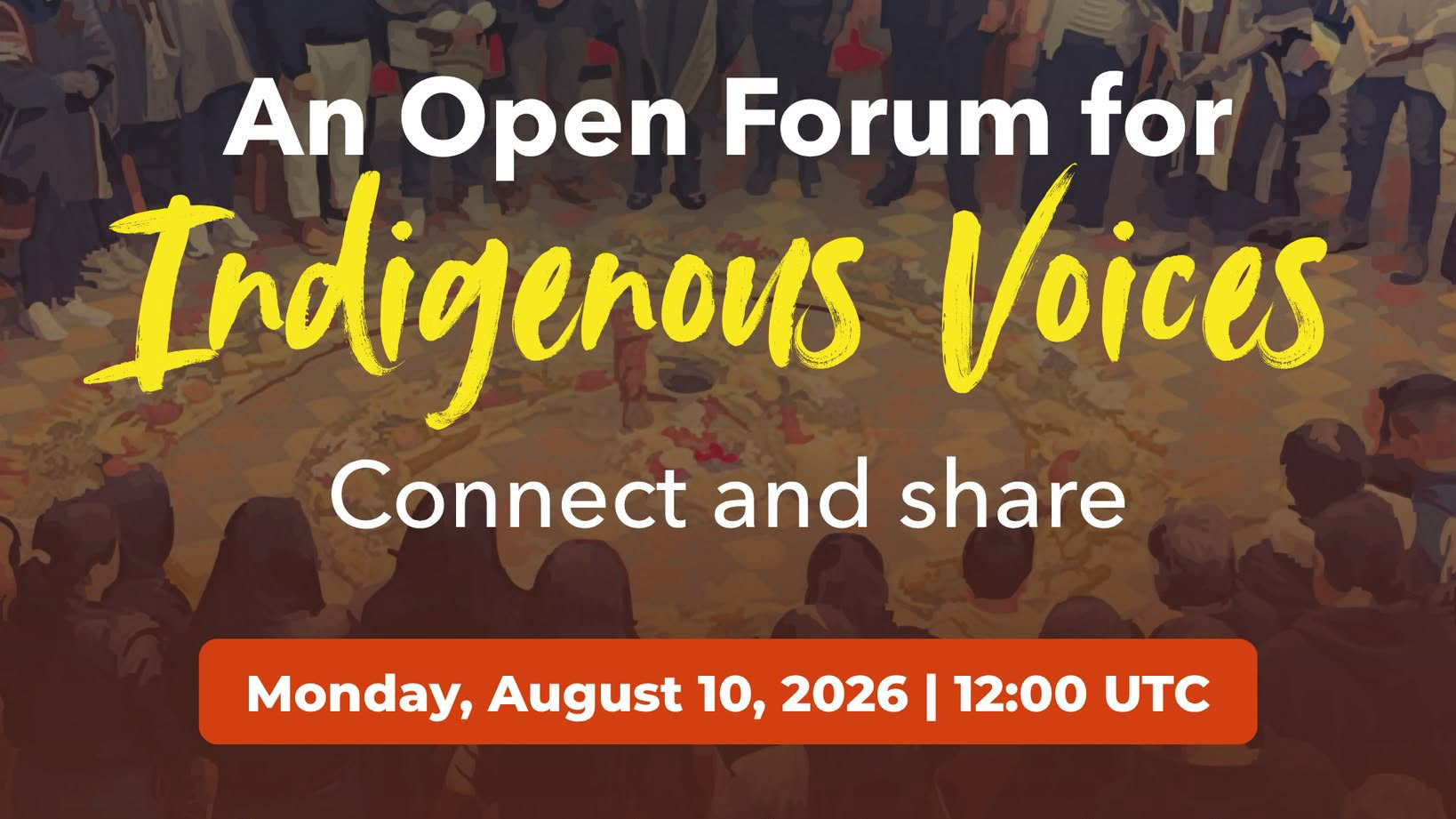
Organized by the ICCA Consortium to commemorate the International Day of the World’s Indigenous Peoples, the “Open Forum on Indigenous Voices” centered on the defense of Indigenous territories and knowledge systems. The event provided a platform to listen to the experiences of two key Indigenous leaders, who addressed the ongoing threats of physical violence, dispossession, and epistemic extractivism facing their communities.
The forum featured a presentation by Héctor Jaime Vinasco from Colombia, who spoke on the experience of the Cañamomo Lomaprieta Reservation in territorial defense. An anthropologist and a member of the reservation’s Governing Council, as well as the former coordinator of the Natural Heritage and Mining Program, Vinasco represents his community across global platforms, including the TICCA Colombia Network and the global ICCA Consortium.
In sharing an account of his community’s historical struggles, he detailed the severe consequences of displacement and the devastating impact of violence, noting that over 550 community members, including prominent land defenders, have been murdered. To protect their territory and self-governance from these threats, Vinasco emphasized the power of partnerships, explaining how the community has built strong alliances with trade unions, universities, and international organizations.
He highlighted key partners like the Forest Peoples Programme and the UNDP Small Grants Programme. These strategic coalitions have been instrumental in providing critical support – securing the political backing and emergency funding necessary to protect human rights, save lives, and successfully counter extractive interests.
The conversation was then led by Amado Ramos from El Salvador, who discussed communal protocols and governance norms for safeguarding Indigenous Peoples’ knowledge. An educator with a background in languages and letters and a diploma in Mother Earth pedagogy, Ramos is an Honorary Member of the ICCA Consortium with deep experience in organizing communities to defend their historical rights and recover the self-governance of Indigenous territories, sacred sites, and territories of life. He focused on the systemic exploitation of Indigenous knowledge across Latin America, drawing on concrete examples from El Salvador, Guatemala, and Colombia to illustrate the pervasiveness of epistemic extractivism.
Ramos highlighted how academics, corporations, and certain NGOs frequently engage in knowledge appropriation and the extraction of traditional knowledge. These unethical practices have impacted ancestral medicine, agriculture, and native languages in many communities, such as the Nawat in El Salvador, without offering recognition or shared benefits to the original communities.
To combat this widespread biopiracy and epistemic violence, Ramos strongly advocated for the creation of internal, community-led communal protocols to act as “normative shields.”
He also stressed that free, prior, and informed consent must be a strict, non-negotiable requirement for any external research or project engaging with communities. Powerfully concluding his address, Ramos reminded the forum that ancestral knowledge is never a mere commodity to be extracted; rather, it is a collective asset and the living voice of the ancestors, offering essential teachings on how to sustain the commons for the survival of social, natural, and spiritual life.