As countries prepare to translate international biodiversity goals into national policy, the recognition of Indigenous and Traditional Territories must preserve the distinction between territorial governance and conservation classification

First published on 09/09/2026, and last updated on 10/15/2026
By June Rubis
Macquarie University Research Fellow, Australia; Co-Founder, Building Initiatives in Indigenous Heritage (BiiH), Sarawak; and Honorary Member, ICCA Consortium
Author note. This short commentary is based on arguments being developed in a longer academic paper for peer-reviewed publication in a special issue of the Journal of Agrarian Change.
The Paradox of Recognition
International recognition may provide important political leverage precisely where national recognition of Indigenous Peoples and local communities, their territories, and customary governance remains weak. But the forms through which recognition becomes administratively possible may themselves privilege particular understandings of territory and governance.
The experience surrounding ICCAs–territories of life recognition offers an important lesson. Concepts developed to make existing forms of territorial governance visible can acquire institutional lives of their own, shaping how governments, conservation organizations, and others subsequently encounter communities and their territories. As Indigenous and Traditional Territories (ITTs) enter the implementation architecture of Target 3 of the Global Biodiversity Framework, the question is therefore not only whether recognition occurs, but how territories become recognizable to institutions, and what may be transformed in that process.
Indigenous and Traditional Territories (ITTs) are now explicitly recognized in Target 3 of the Kunming–Montreal Global Biodiversity Framework, the global commitment to conserve 30% of lands and waters by 2030 (Convention on Biological Diversity [CBD], 2022a). Recognition of ITTs was an important political achievement after years of sustained work by negotiators and advocates (International Indigenous Forum on Biodiversity [IIFB], 2025).
But as countries move from agreement to implementation, there is a risk that making a territory legible to conservation institutions comes to stand in for recognizing its territorial governance. An important distinction therefore needs to be maintained: identifying a territory, recognizing its governance system, and classifying it for conservation are not the same thing.
An Indigenous or Traditional Territory should not have to become a protected area, an Other Effective Area-Based Conservation Measure (OECM), or another conservation category for its governance to be recognized. The distinction may seem straightforward, but conservation institutions often make territories legible through mapping, designation, management, monitoring, and reporting processes that can bring these different institutional acts into closer relationship in practice (Rubis & Theriault, 2020).
An Indigenous or Traditional Territory is not constituted by its identification as an ITT within an international policy framework. Communities may have their own names for their territories, their own understandings of territorial relationships and responsibilities, their own governance institutions and political histories, and boundaries that may be fixed, overlapping, or relational (Stevens et al., 2024). The distinction therefore matters because it asks whether institutions are recognizing territorial governance on its own terms or making it legible through categories and administrative practices developed for other purposes.
Yet recognition itself can be politically significant. For many Indigenous Peoples and local communities, particularly where customary territories and their governance remain poorly recognized in national law and policy, international recognition can provide political language and leverage for territorial systems that governments have marginalized or rendered administratively invisible. Target 3 provides international policy recognition of Indigenous and Traditional Territories; it does not itself confer legal recognition on particular territories or their governance systems. How that recognition is translated into national law, policy, and practice is therefore a separate question.
In an earlier article in Policy Matters, I argued that Indigenous and Traditional Territories should be understood as governance systems in their own right. That argument builds on longstanding work and advocacy by Indigenous Peoples and local communities for recognition and respect for their territories, territorial governance, customary laws, and institutions (Rubis, 2025a, 2025b).
Their explicit recognition in Target 3 now brings these questions into a new institutional setting. Forest Peoples Programme and partners have already examined ITTs alongside protected areas and OECMs as a distinct Target 3 pathway, with particular attention to rights and self-determined implementation, while Target 22 provides an important complementary rights context concerning lands, territories and resources (CBD, 2022b; Forest Peoples Programme [FPP], 2024a, 2024b).
As ITTs move toward implementation through Article 8(j), the Programme of Work on Protected Areas (PoWPA), and national biodiversity planning, the question here is what form recognition takes and which institutions give it practical effect.
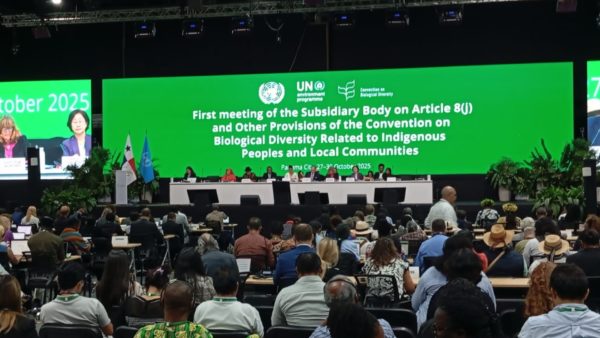
Implementation work is already underway. The Programme of Work on Article 8(j) includes a priority task to develop guidelines on ITTs in support of Targets 2 and 3, alongside work on traditional lands and resource use in spatial planning. At the first meeting of the Subsidiary Body on Article 8(j) in Panama City in October 2025, Parties negotiated proposed elements for these guidelines, now contained in Recommendation 1/3 for consideration at the 17th meeting of the Conference of the Parties (COP17) to the CBD. These guidelines provide an important site in which the meaning and conditions of ITT recognition may begin to be articulated before they are translated through national legal and institutional arrangements.
This distinction matters because Indigenous and Traditional territorial governance does not acquire its authority through recognition under the CBD. Governance systems, institutions, customary laws, and relationships with lands and waters may long precede recognition within the CBD. Implementation therefore involves more than identifying territories that may contribute to biodiversity objectives. It also requires attention to the governance systems through which those territories are constituted and maintained.
In parallel, the Subsidiary Body on Scientific, Technical and Technological Advice (SBSTTA) has provided input for the first formal update of the Programme of Work on Protected Areas since its adoption in 2004. The update is intended to support Target 3 implementation, including greater attention to qualitative dimensions such as equitable governance, and will be considered at COP17.
The Article 8(j) guidelines and proposed PoWPA update bring two parts of the Convention with different institutional histories into closer relationship. PoWPA is closely connected to national protected-area systems, conservation planning, management, and biodiversity monitoring; Article 8(j) has developed around Indigenous knowledge, customary institutions, participation, rights, and relationships with territories. Their intersection therefore raises a practical question: how will recognition of territorial governance be given effect as these different institutional domains engage with ITTs?
Protected-area institutions bring established administrative practices of designation, management, monitoring, and reporting. Indigenous and Traditional Territories, however, may encompass systems of territorial authority, customary governance and law, livelihoods, cultural continuity, and relationships of responsibility between peoples, lands and waters. Bringing ITTs into closer relationship with protected-area institutions therefore raises questions not only about how territories contribute to conservation objectives, but also about how territorial governance itself is recognized within those administrative systems.
National biodiversity planning may provide another pathway. In the Philippines, Indigenous Peoples developed an Indigenous Peoples’ Biodiversity Strategy and Action Plan (IPBSAP), articulating their own priorities, targets, and contributions to implementation of the GBF and bringing these into the national biodiversity planning process. The IPBSAP is not itself an ITT recognition mechanism, but it illustrates how Indigenous territorial governance and biodiversity priorities can enter national implementation through a rights-holder-led planning process rather than only through protected-area or conservation classification (Department of Environment and Natural Resources [DENR], 2025; Indigenous Peoples and Biodiversity Coalition Philippines [IPBC], 2024; Reyes, 2025).
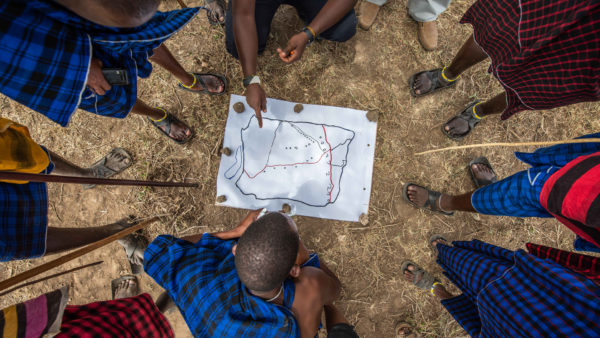
The political significance of ITT recognition varies considerably between contexts. Across parts of Southeast Asia, territorial governance continues within landscapes shaped by overlapping state land classifications, commercial concessions, and protected areas (Hall et al., 2011). Forest-carbon and other climate interventions are adding further institutional layers to these already contested landscapes (Lau et al., 2025). In Indonesia, Indigenous Peoples, local communities, and their organizations have used community and counter-mapping since at least the 1990s to assert customary territorial claims against state forest classifications (Peluso, 1995). More recently, Aliansi Masyarakat Adat Nusantara (AMAN, 2025) and Badan Registrasi Wilayah Adat (BRWA, 2024) have linked community mapping to systems for verification, registration, and formal recognition, while working to integrate customary-territory maps into official geospatial systems. These processes make territories legible within state institutions as part of a broader political project of asserting authority grounded in Indigenous institutions. My own published research in Sarawak similarly examines how Dayak territorial relationships and practices remain active while being negotiated within legal, conservation, and resource-governance systems that recognize them only partially (Rubis, 2019, 2024).
Experiences from Australia and Canada provide insights from different historical and institutional settings. Australia’s Indigenous Protected Areas program has supported First Nations management of Country while delivering environmental, cultural, social, and economic benefits, including intergenerational knowledge-sharing (Department of Climate Change, Energy, the Environment and Water [DCCEEW], n.d.). In Canada, Indigenous Protected and Conserved Areas are framed around Indigenous governments having the primary role through Indigenous laws, governance, and knowledge systems, although their institutional forms may range from Indigenous governance to different co-governance arrangements (Indigenous Circle of Experts [ICE], 2018). The Canadian experience also brings continuing questions of jurisdiction and the relationship between Indigenous governance and state conservation systems more clearly into view (Townsend & Roth, 2024). The balance between these opportunities and questions will differ according to the political, legal, and institutional contexts in which recognition takes place, particularly where recognition of Indigenous Peoples and local communities, their customary governance systems, and their territories remains partial.
As Parties prepare for COP17 in Armenia, how these processes connect will shape what recognition comes to mean in practice. Maintaining the distinction between identifying a territory, recognizing its governance system, and classifying it within a conservation category will therefore become increasingly important as implementation proceeds. Recognition of an ITT should not in itself require its classification as an OECM or another conservation category. Nor should recognition within a conservation framework imply that Indigenous and Traditional Territories derive their meaning or authority from that framework. The intersection between PoWPA and Article 8(j) thus provides an opportunity for Indigenous and traditional territorial governance to shape the institutions that will increasingly engage with ITTs as Target 3 is implemented.
Terminology note. In this article, “local communities” is used in the sense of local communities embodying traditional lifestyles, consistent with the terminology of Article 8(j) of the CBD.
What Does ITT Recognition Add to Longstanding Work on ICCAs–Territories of Life?
The movement of ICCAs–territories of life has developed a substantial body of experience and scholarship on the appropriate recognition of territories and areas conserved by Indigenous Peoples and local communities. This work has established important principles concerning self-determination and self-recognition, custodians’ authority and governance institutions, collective rights, and the multiple legal and policy pathways through which territories of life may be recognized. It has also shown that recognition as a protected area or OECM is neither necessary nor necessarily appropriate for every territory of life. The experience of ICCA recognition also shows how concepts developed to make existing forms of territorial governance visible can acquire institutional lives of their own, shaping how governments, conservation organizations, and others subsequently encounter communities and their territories.
The explicit recognition of Indigenous and Traditional Territories in Target 3 brings this accumulated experience into a new institutional context. At the global level, ITTs are now being taken forward through Article 8(j) and the Programme of Work on Protected Areas; their practical recognition will ultimately be worked out through national legal, policy, and governance arrangements. This creates a need to follow more closely what recognition entails across these levels and domains.
The distinction proposed in this commentary, between identifying a territory, recognizing its governance system, and classifying it within a conservation category, provides one way of doing so. It focuses attention on the different institutional acts that can become bundled together in implementation, while drawing on the longer experience of the ICCA movement with appropriate recognition. This may be particularly useful as emerging work on ITTs encounters contexts in which ICCAs–territories of life are already an important framework for community governance, as well as those in which territorial governance is articulated through other customary and institutional arrangements.
References
Aliansi Masyarakat Adat Nusantara. (2025). BRWA verifikasi 14 wilayah adat di Toraja. https://www.aman.or.id/index.php/news/read/2223
Badan Registrasi Wilayah Adat. (2024). Perluasan registrasi dan pengakuan wilayah adat: Rapat pleno dan penyusunan rencana strategis BRWA. https://v4.brwa.or.id/berita/perluasan-registrasi-dan-pengakuan-wilayah-adat-rapat-pleno-dan-penyusunan-rencana-strategis-brwa/717.html
Convention on Biological Diversity. (2022a). Kunming–Montreal global biodiversity framework: Target 3. https://www.cbd.int/gbf/targets/3
Convention on Biological Diversity. (2022b). Kunming–Montreal global biodiversity framework: Target 22. https://www.cbd.int/gbf/targets/22
Department of Climate Change, Energy, the Environment and Water. (n.d.). Indigenous protected areas. https://www.dcceew.gov.au/environment/land/indigenous-protected-areas
Department of Environment and Natural Resources. (2025). Philippine biodiversity strategy and action plan (PBSAP) 2024–2040: Abridged version (DENR Administrative Order No. 2025-23). Biodiversity Management Bureau. https://bmb.gov.ph/wp-content/uploads/2025/09/Signed_DAO_2025-23_w_Annex_PBSAP_Abridged_Version.pdf
Forest Peoples Programme. (2024a). Conservation pathways (Briefing paper). https://www.forestpeoples.org/publications-resources/briefing-papers/article/conservation-pathways/
Forest Peoples Programme. (2024b). Conservation pathways needs assessment. https://www.forestpeoples.org/publications-resources/reports/article/conservation-pathways-needs-assessment/
Hall, D., Hirsch, P., & Li, T. M. (2011). Powers of exclusion: Land dilemmas in Southeast Asia. NUS Press; University of Hawaiʻi Press.
Indigenous Circle of Experts. (2018). We rise together: Achieving pathway to Canada Target 1 through the creation of Indigenous protected and conserved areas in the spirit and practice of reconciliation. Parks Canada. https://publications.gc.ca/site/eng/9.852966/publication.html
Indigenous Peoples and Biodiversity Coalition Philippines. (2024). Indigenous peoples’ biodiversity strategy and action plan (IPBSAP), Philippines. https://transformativepathways.net/wp-content/uploads/2024/12/Philippines-IPBSAP-October-2024.pdf
International Indigenous Forum on Biodiversity. (2025). Position on target 3. https://iifb-indigenous.org/wp-content/uploads/2025/02/iifb-position-on-target-3-3.pdf
Lau, Y., Kenney-Lazar, M., Bashir, S. N., Cole, R., Gevaña, D. T., Lee, J., Marks, D., Miller, M. A., Ren, Y., Taylor, D., & Zhou, Y. (2025). Challenges in forest carbon governance: Insights from Southeast Asia. Wiley Interdisciplinary Reviews: Climate Change, 16(5), e70018. https://doi.org/10.1002/wcc.70018
Peluso, N. L. (1995). Whose woods are these? Counter-mapping forest territories in Kalimantan, Indonesia. Antipode, 27(4), 383–406. https://doi.org/10.1111/j.1467-8330.1995.tb00286.x
Reyes, G. B. (2025). IPBSAP: Advancing Indigenous Peoples-led sustainable biodiversity. Policy Matters, (24). https://portals.iucn.org/library/sites/library/files/documents/Policy-Matters-Issue-24.pdf
Rubis, J. (2019). Seeing the utan from the orang: A decolonial Indigenous approach to orang utan conservation in Sarawak [Doctoral dissertation, University of Oxford]. Oxford University Research Archive. https://ora.ox.ac.uk/objects/uuid:11bec69e-f190-4df4-9311-8f53a6bf1a77
Rubis, J. (2024). A political ecology of remembering for Dayaks of Sarawak, Malaysian Borneo. In A. Fleschenberg, K. Kresse, & R. C. A. Castillo (Eds.), Thinking with the South: Reframing research collaboration amid decolonial imperatives and challenges (pp. 249–274). De Gruyter. https://doi.org/10.1515/9783110780567
Rubis, J. (2025a, July 7). Reimagining conservation through Indigenous remembering and revitalisation. IUCN CEESP Blog. https://iucn.org/blog/202507/reimagining-conservation-through-indigenous-remembering-and-revitalisation
Rubis, J. (2025b). Reimagining conservation through Indigenous remembering, revitalisation, and the recognition of Indigenous and traditional territories. Policy Matters, (24). https://portals.iucn.org/library/sites/library/files/documents/Policy-Matters-Issue-24.pdf
Rubis, J., & Theriault, N. (2020). Concealing protocols: Conservation, Indigenous survivance, and the dilemmas of visibility. Social & Cultural Geography, 21(7), 962–984. https://doi.org/10.1080/14649365.2019.1574882
Stevens, S., Eghenter, C., Fitzsimons, J., Goradze, I., Ironside, J., Mellis, C., Nitah, S., Parling, P., Reyes, G., & Tabanao, G. (2024). Recognising territories and areas conserved by Indigenous peoples and local communities (ICCAs) overlapped by protected areas (IUCN WCPA Good Practice Guidelines No. 34). IUCN. https://doi.org/10.2305/RSLY2962
Townsend, J., & Roth, R. J. (2024, January 4). Canada’s nature agreement underscores the need for true reconciliation with Indigenous Nations. The Conversation. https://thetyee.ca/Analysis/2024/01/25/Removing-Roadblocks-Indigenous-Protected-Conserved-Areas/
DOI: https://doi.org/10.70841/HJH76B. © 2026 The Author. Published by the ICCA Consortium.
Published under the terms of the Creative Commons Attribution-NonCommercial 4.0 International license.
Reviewed by: Cristina Eghenter and Mohammad Arju
Correspondence concerning this article should be addressed to June Rubis at jrubis@gmail.com
The views expressed in this commentary are those of the author and do not necessarily reflect the views or policy positions of the ICCA Consortium.
Recommended citation: Rubis, J. (2026). Recognition is only the beginning: Indigenous and traditional territories after Target 3 of the Global Biodiversity Framework (On Governance). ICCA Consortium. https://doi.org/10.70841/HJH76B